What is Scrum Framework? A Complete Guide to Agile Success
What is Scrum Framework? A Complete Guide to Agile Success
At its heart, Scrum is a lightweight yet powerful framework designed to help teams navigate complex projects and deliver valuable products. For IT professionals, understanding Scrum isn't just about managing tasks; it's about mastering an adaptable approach that drives innovation and ensures solutions truly meet evolving needs. Think of it as a flexible playbook for small, highly skilled teams to collaborate effectively, building something great, piece by piece, through short, focused cycles called Sprints.
Breaking Down the Scrum Framework
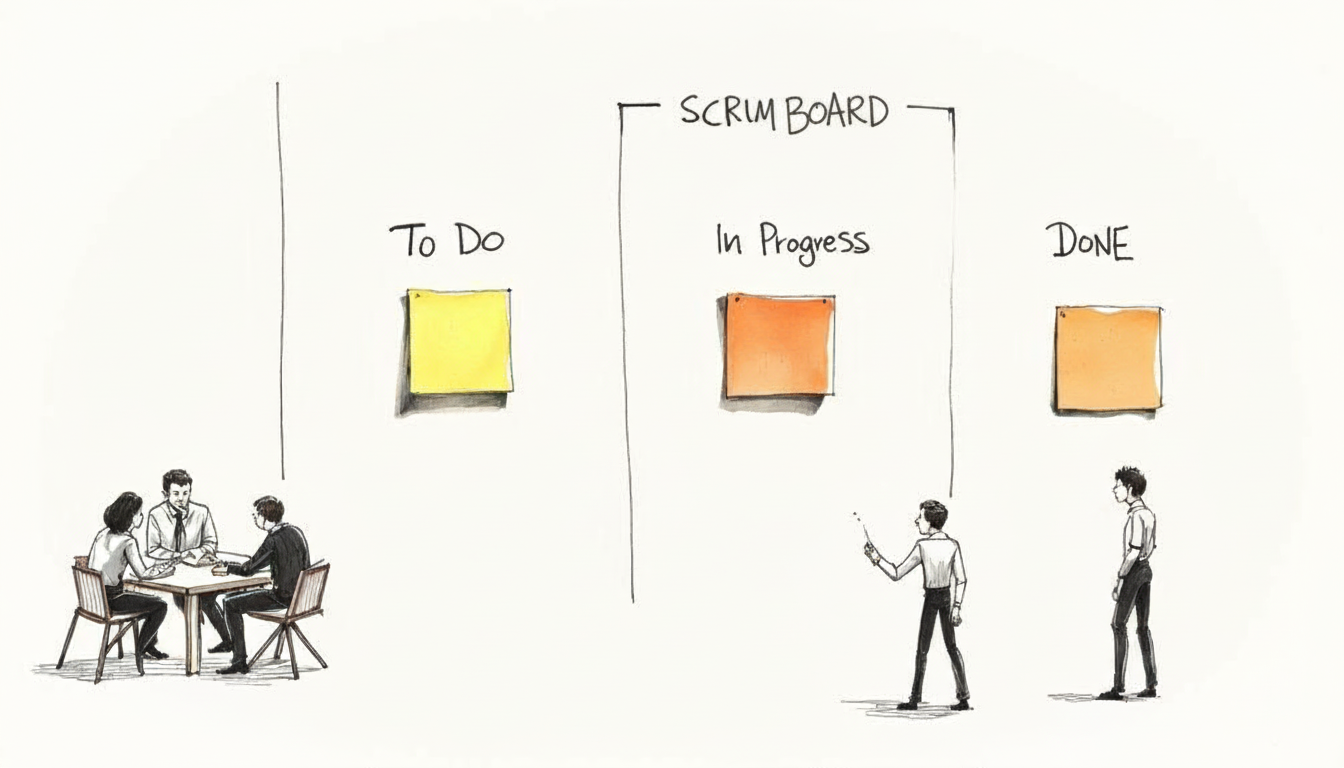 Scrum provides a structured yet flexible approach to iterative product development, enabling rapid adaptation and continuous delivery of value.
Imagine an IT department tasked with developing a new internal enterprise application or migrating a critical service to a cloud platform like AWS or Azure. The traditional approach might involve spending months crafting an exhaustive, fixed plan for the entire project. With Scrum, the approach is fundamentally different. The team breaks the overarching project down into small, digestible chunks of work, prioritizing what delivers the most immediate value.
They then select the most crucial features or system components and commit to building a working, shippable version of them within a short, time-boxed period—typically one to four weeks. This focused period is known as a Sprint. This continuous cycle of planning, building, testing, and reviewing creates a steady, predictable rhythm that keeps the team focused and allows them to adapt swiftly to new requirements or challenges.
This iterative process is the very core of what the Scrum framework is. Instead of long, drawn-out development cycles filled with uncertainty, Scrum introduces regular checkpoints. These built-in feedback loops give stakeholders and customers a chance to see tangible progress and provide input, ensuring the final product or solution truly aligns with business needs. It’s this adaptability that makes Scrum exceptionally powerful in the dynamic world of IT, where technological landscapes and business requirements are constantly shifting.
To give you a quick overview, the table below summarizes the core components that make Scrum work.
Scrum Framework at a Glance
| Component | Brief Description |
|---|---|
| Scrum Team | A small, self-managing unit with a Product Owner, a Scrum Master, and Developers. |
| Scrum Events | A set of five prescribed, time-boxed meetings that provide structure and rhythm. |
| Scrum Artifacts | Three key tools—the Product Backlog, Sprint Backlog, and Increment—that make work and value transparent. |
| Scrum Values | The five core values (Commitment, Courage, Focus, Openness, and Respect) that guide the team's mindset and collaboration. |
| Pillars of Empiricism | The foundational principles of Transparency, Inspection, and Adaptation that drive the entire process. |
Each of these components plays a critical role in creating a system where IT teams can learn, improve, and consistently deliver high-quality solutions. This systematic approach is also a key reason why frameworks like Scrum are often covered in certification exams, emphasizing their importance in modern project management.
Scrum is fundamentally built on an empirical approach. This means it's all about making work and processes transparent, frequently inspecting the outcomes, and adapting based on real-world learning. It prioritizes continuous improvement derived from tangible results over rigid adherence to a static plan.
As we dive deeper, we'll explore each of these elements—the roles, events, and artifacts—and see how they all fit together to create a collaborative and effective working environment for any IT initiative.
The Pillars and Values Driving Scrum
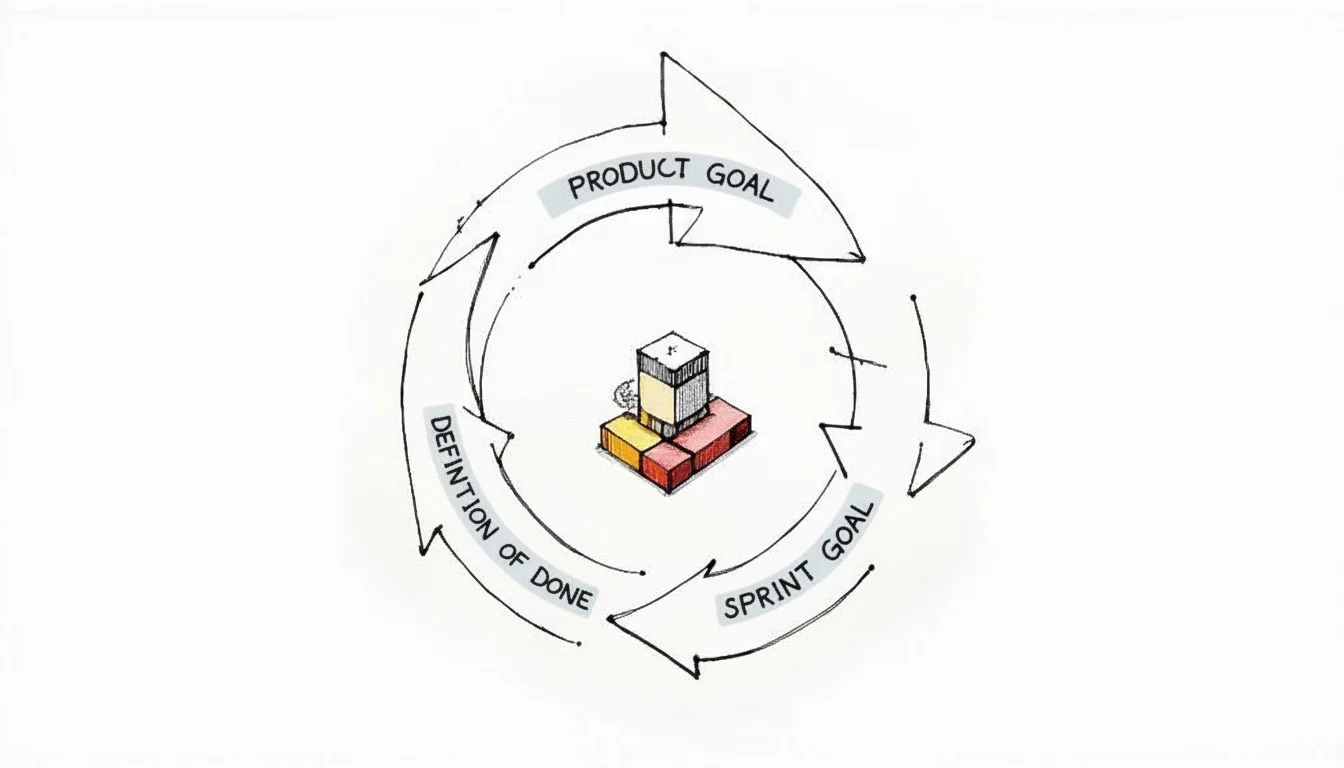
 The foundational pillars of Transparency, Inspection, and Adaptation are supported by the five core Scrum values, creating a robust framework for iterative development.
To truly grasp Scrum, IT professionals must look beyond the meetings and job titles. At its heart, Scrum embodies empiricism—a simple yet profound idea: learn by doing and make decisions based on real-world evidence. This entire approach is held up by three core pillars: Transparency, Inspection, and Adaptation.
Consider these pillars in the context of managing an IT infrastructure project. Transparency is like having a real-time dashboard showing network performance, system health, and project progress. Everyone involved—from network engineers to business stakeholders—needs a clear, unobstructed view of the work, its status, and any potential roadblocks. There are no hidden outages or secret project delays; what you see is what you get, fostering trust and enabling informed decisions.
This clarity makes the next pillar, Inspection, possible. This is akin to a cybersecurity analyst constantly monitoring logs, running vulnerability scans, and reviewing system configurations. In Scrum, teams formally and informally inspect their progress and processes frequently during events like the Daily Scrum and the Sprint Review, looking for deviations or areas for improvement.
Finally, we have Adaptation. If an inspection reveals a critical security vulnerability (inspection), the team doesn't just proceed as planned. They immediately adjust their work, perhaps prioritizing a patch or reconfiguring a firewall (adaptation). It’s that simple. When a Scrum team inspects their work and finds something isn't optimal or could be better, they adjust their plan or their process, often during the Sprint Retrospective, to get back on track or improve future Sprints.
The Three Pillars of Empiricism
These pillars aren't just abstract concepts; they form a tight feedback loop that keeps IT projects grounded in reality and continuously improving.
- Transparency: All key aspects of the development process and the product's progress must be visible and understandable to everyone responsible for the outcome. This means using common tools (e.g., Jira, Azure DevOps), a common language, and ensuring a shared understanding of what "done" truly means for every feature or component.
- Inspection: The team must frequently check their progress toward the Sprint Goal and the evolving product Increment to spot any problems, deviations, or emerging risks (e.g., technical debt, performance issues) before they escalate.
- Adaptation: If an inspection reveals that things are heading off course or could be improved, the process or product must be adjusted as quickly as possible. This could mean refining requirements, changing technical approaches, or altering team collaboration methods.
But a framework needs more than just structural pillars. It needs a soul, especially when building complex IT solutions. That's where the Scrum values come in.
The Five Scrum Values
If the pillars define the "how" of Scrum's empirical process, the five values articulate the "who" – the mindset and behavior that enable it. They shape the team’s culture and guide their interactions. Without these values, Scrum can feel like merely going through the motions. But when an IT team truly embodies them, they create an environment of trust and psychological safety where the three pillars can actually flourish.
The Scrum values are what transform a collection of rules into a genuine pathway for collaborative problem-solving and high performance. They provide essential behavioral guidance, particularly when teams face technical challenges or tight deadlines.
Living these values is what transforms a group of IT professionals into a cohesive unit that can solve tough, complex problems together, whether it’s debugging a critical system or architecting a scalable cloud solution.
- Commitment: Team members personally commit to achieving the team's goals and supporting each other. This isn't just a promise to a manager; it's a shared pledge to deliver a working Increment, much like a DevOps team committing to a successful release.
- Courage: The team has the courage to do the right thing—to tackle difficult technical problems, challenge outdated assumptions about system architecture, and be honest about obstacles, even when it means admitting a design flaw.
- Focus: Everyone concentrates on the work of the Sprint and the team's shared goals. In the noisy IT environment, this means tuning out distractions and prioritizing the tasks that genuinely contribute to the Sprint Goal, resisting the urge to context-switch constantly.
- Openness: The team and its stakeholders agree to be open about the work, the progress, and the challenges that come with it. This includes transparently sharing test results, admitting when a technical approach isn't working, and being receptive to feedback from users or security audits.
- Respect: Team members respect each other as capable, independent professionals, acknowledging diverse technical skills and perspectives. It’s the recognition that every engineer, tester, and analyst brings valuable expertise to the table in solving complex IT problems.
Reflection Prompt: Consider an IT project you've worked on. How might stronger adherence to these Scrum values, particularly Transparency and Courage, have positively impacted the outcome or team dynamics?
Understanding the 3 Scrum Team Roles
A great Scrum team feels a lot like a well-oiled machine or a championship sports team. It’s a small, tight-knit group where every person has a specific part to play, but they all share the same goal: delivering a valuable Increment. You can throw traditional IT project hierarchies right out the window. In Scrum, it's all about collaboration, shared accountability, and self-organization, not a single manager dictating every task.
This entire structure is built around three distinct, synergistic roles: the Product Owner, the Scrum Master, and the Developers.
There's no project manager in the classic sense who dictates tasks. Instead, leadership and responsibility are spread across these three roles. This setup is intentional—it builds a strong sense of ownership and allows decisions to move quickly. The team can react to new technical information or business priorities without having to wait for multiple layers of management approval.
The Product Owner: The Visionary
The Product Owner is the strategic lead, the one who's always focused on the "why" and "what." Their primary responsibility is maximizing the value of the product that the Developers are building. They are the sole person accountable for the Product Backlog, which is essentially the prioritized master list of all work needed for the product.
Think of the Product Owner as the architect of a new cloud-native application on Azure. They articulate the vision, understand the business requirements, and prioritize which features will deliver the most value to users or the organization. They don't dictate how the engineers code or configure the services—that’s up to the Developers—but they are 100% accountable for ensuring the team is building the right things.
To fulfill this, they have to:
- Clearly define, communicate, and prioritize items on the Product Backlog, often as user stories (e.g., "As a system administrator, I want to monitor resource utilization in real-time to proactively manage performance.").
- Ensure the Product Backlog is visible, transparent, and understood by everyone on the Scrum Team and key stakeholders.
- Ensure the Developers have sufficient detail and context to understand the value and scope of each backlog item.
The Product Owner serves as the voice of the customer and represents all stakeholders, constantly balancing business needs, user feedback, market demands, and technical realities to decide what the team should build next. This role often requires a deep understanding of the domain, sometimes supported by certifications like those for business analysis or cloud architecture.
The Scrum Master: The Coach
The Scrum Master is what we call a servant-leader. Their focus isn't on the product itself, but on the team and the Scrum process. The main goal here is to help everyone understand and embody Scrum principles, continually improving their effectiveness. They're the team's coach, ensuring everyone is "playing by the rules" (of Scrum) and, more importantly, always improving their game.
A significant part of their job is removing impediments—any roadblock slowing the team down. This could be anything from a faulty piece of development software or an unresponsive API to a communication breakdown with another IT department or an organizational policy that hinders agility. They also facilitate the Scrum events, making sure they’re productive, time-boxed, and focused.
It's a common misconception to view the Scrum Master as the team's boss or a traditional project manager. They are not. They hold no direct authority over team members. Their leadership stems from coaching, guiding, and empowering the team to become a truly self-managing unit, ensuring adherence to Scrum's principles and values.
While the Scrum Master role is distinct from a traditional IT project manager, you can learn more about how some skills and leadership qualities overlap by exploring the responsibilities of IT project managers and how certifications like PMP prepare professionals for complex project environments, even those utilizing agile frameworks.
The Developers: The Makers
The Developers are the skilled experts who get their hands dirty and actually build the product Increment. In Scrum, "Developers" is a broad term; it doesn't just mean coders. A development team is cross-functional, meaning it possesses all the skills needed to deliver a "Done," usable piece of work each Sprint. That could include software engineers, network specialists, cybersecurity analysts, UX/UI designers, quality assurance testers, or technical writers—whoever is needed to achieve the Sprint Goal.
They are the ones who create a detailed plan for the Sprint (the Sprint Backlog) and are responsible for the quality of the work, which they measure against a universally agreed-upon "Definition of Done." Developers are empowered to manage their own tasks and collectively figure out the best technical approach to turn a Product Backlog item into a valuable piece of the final product, whether it's an AWS Lambda function, an ITIL-compliant service, or a new feature for an enterprise application.
To help visualize how these roles work together, let's look at a simple breakdown.
Scrum Team Roles and Responsibilities
| Role | Primary Focus | Key Responsibilities |
|---|---|---|
| Product Owner | Maximizing Product Value | Owns and prioritizes the Product Backlog; represents stakeholders; defines the product vision and features. |
| Scrum Master | Process and Team Health | Coaches the team in Scrum; removes impediments; facilitates events; fosters self-management and continuous improvement. |
| Developers | Delivering a Usable Increment | Creates the Sprint plan (Sprint Backlog); builds, tests, and integrates the product; ensures quality against the Definition of Done; adapts their plan daily. |
This table clearly illustrates how each role has a defined focus, but they are all interdependent, working collaboratively to succeed. The Product Owner points the way, the Developers build the solution, and the Scrum Master keeps the engine running smoothly, ensuring the team's continuous improvement.
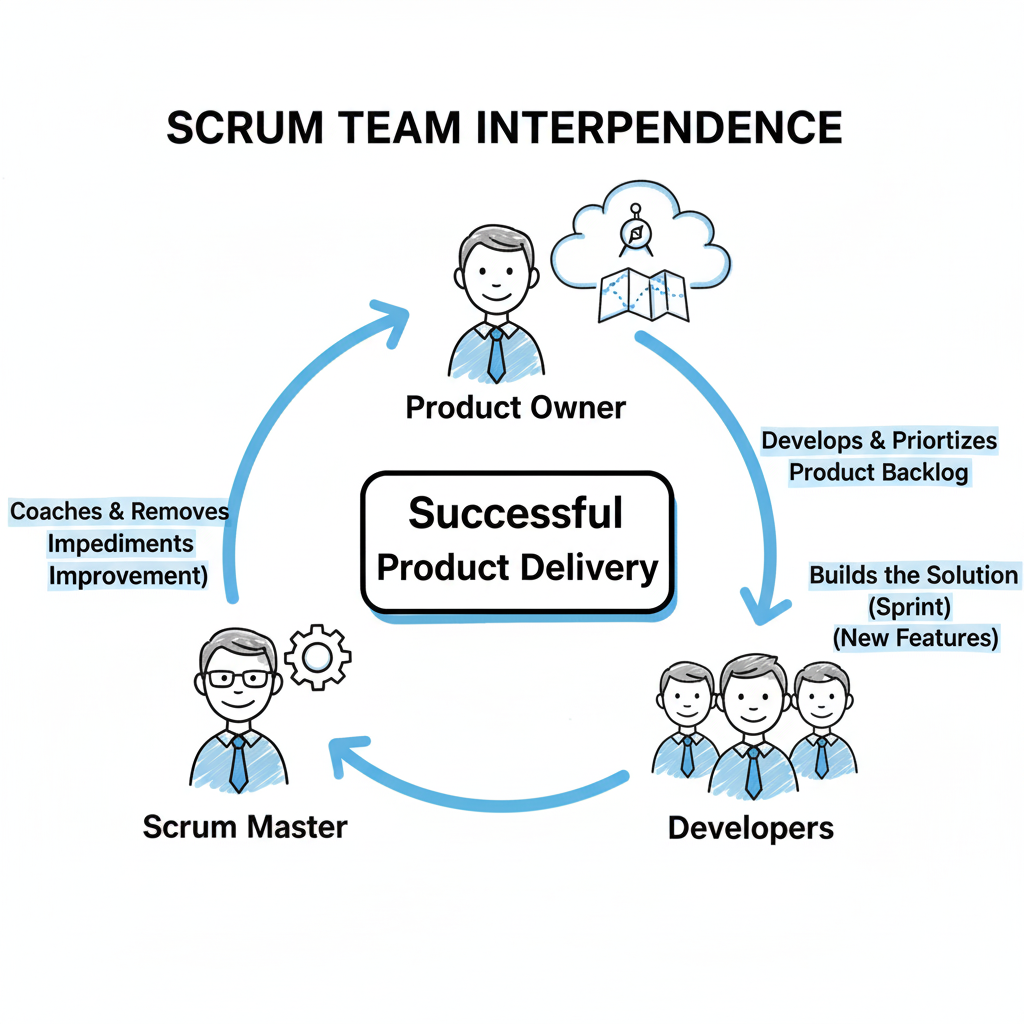 The flow of work in Scrum illustrates the distinct yet interconnected responsibilities of the Product Owner, Developers, and Scrum Master, all contributing to the creation of the Increment.
As you can see in the diagram, the Product Owner is constantly refining the big-picture Product Backlog, which evolves based on market feedback and strategic shifts. Meanwhile, the Developers own the short-term Sprint Backlog, updating it daily to track their progress. It's a beautifully balanced system that keeps both the long-term vision and the day-to-day IT development work in perfect sync.
The Events That Create Scrum's Rhythm
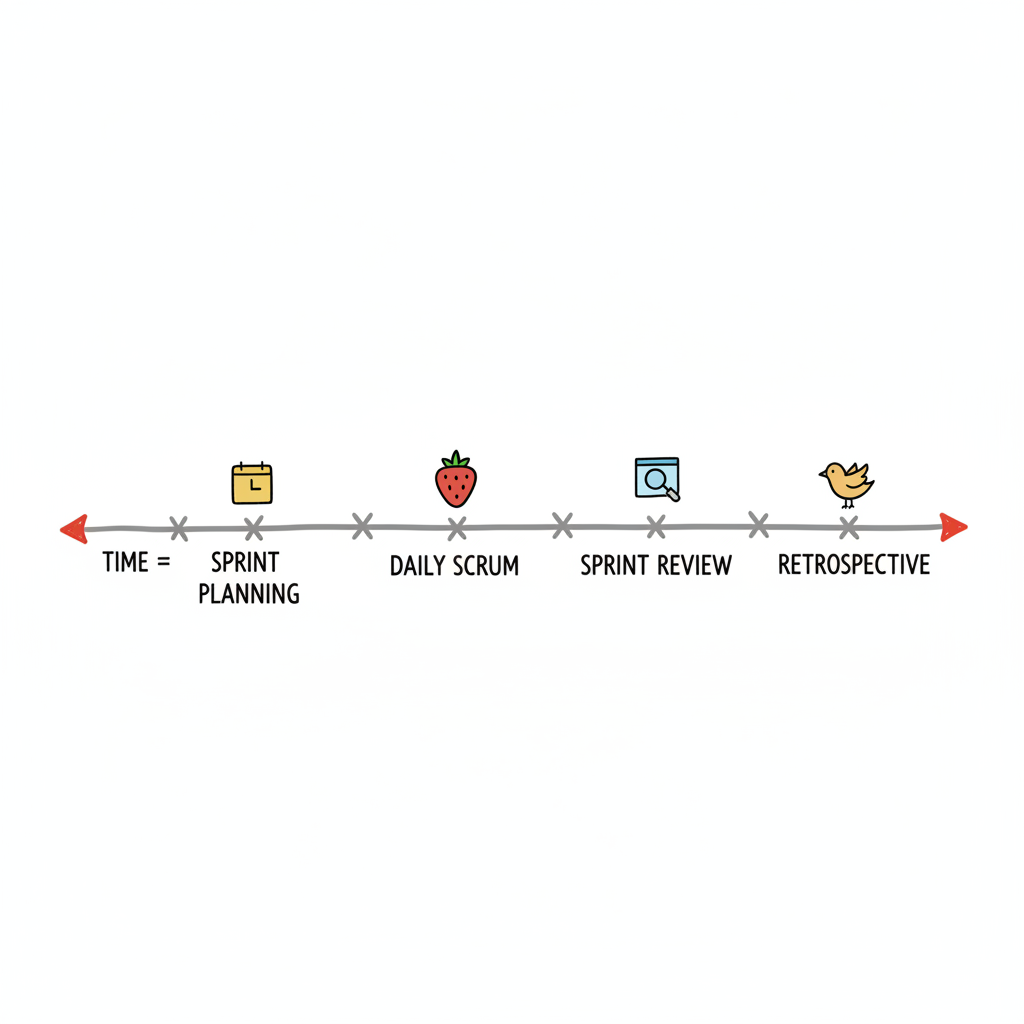 Scrum events provide a predictable rhythm, facilitating regular inspection and adaptation to keep IT projects on track and maximize value delivery.
The real magic of Scrum isn't in any single role or artifact—it's in its steady, predictable rhythm. Scrum replaces chaotic, unpredictable ad-hoc meetings with a clear structure of five formal events. Each one is time-boxed, meaning it has a maximum duration, which creates regularity and efficiently cuts down on the need for those "quick sync" interruptions that often derail an IT professional's focus.
Think of these events as the project's heartbeat. They provide consistent opportunities for the Scrum Team to inspect their work, adapt their plan, and ensure they are always moving forward efficiently, whether building a new feature or resolving critical technical issues.
The container for everything is The Sprint. This is a fixed-length work period, usually between one and four weeks, during which the team focuses intently on creating a "Done," usable piece of the product. As soon as one Sprint concludes, the next one begins without a break. This cadence keeps a steady pace and helps everyone maintain focus, momentum, and a clear understanding of deadlines, crucial for certifications like PMP that emphasize project planning.
Sprint Planning: Kicking Off the Work
Every single Sprint starts with Sprint Planning. This is a collaborative session where the entire Scrum Team gets together to figure out two critical things: what can be delivered in the upcoming Sprint (the Sprint Goal and selected Product Backlog Items) and how they'll get that work done. It’s less about a rigid, unchangeable commitment and more about creating a realistic forecast for the next iteration.
The Product Owner kicks things off by presenting the highest-priority items from the Product Backlog, explaining their value and answering questions. The Developers then dive into these items, asking clarifying questions, discussing technical approaches (e.g., "Can we implement this using serverless functions on AWS Lambda?" or "What APIs do we need to integrate with?"), and breaking them down into smaller tasks until everyone has a crystal-clear understanding of what’s involved.
From there, the Developers collaboratively pull in the amount of work they genuinely believe they can complete, based on their capacity and past performance. This collection of items becomes the Sprint Backlog. To tie it all together, the team crafts a Sprint Goal—a single, clear objective that gives their work a shared purpose for the Sprint (e.g., "Implement core user authentication for the new mobile app" or "Stabilize database performance by 20%").
The Daily Scrum: A Quick Sync-Up
Once the Sprint is rolling, the Daily Scrum becomes the team's daily pulse check. It's a quick, 15-minute meeting just for the Developers to sync up and map out their plan for the next 24 hours. Crucially, this is not a status report for a manager; it's a planning huddle for the people doing the hands-on work, fostering self-management and collaboration.
The whole point is to inspect progress toward the Sprint Goal and make any necessary adjustments to the Sprint Backlog. Team members typically discuss what they finished yesterday, what they're tackling today, and any roadblocks (impediments) standing in their way (e.g., "I'm blocked waiting for access to the Azure subscription," or "The integration test suite is failing unexpectedly"). This quick daily touchpoint keeps collaboration high and helps squash problems before they grow into major issues.
The Daily Scrum is essential for maintaining momentum and transparency in IT projects. It's the team's chance to self-manage and adjust their course daily, ensuring they stay aligned and focused on the Sprint Goal and proactively address technical challenges.
To keep these meetings fresh and valuable, many teams find creative ways to stay engaged. If you're looking for inspiration, you can find great ideas and questions for engaging Daily Standups that can turn a routine check-in into a powerful planning moment for any IT team.
The Sprint Review: Inspecting the Outcome
When the Sprint concludes, the team holds a Sprint Review. This isn't a stuffy presentation; it's an informal, collaborative working session where the Scrum Team and key stakeholders (e.g., product managers, business users, compliance officers) get together to look at what was accomplished. The main goal is to inspect the new product Increment and adapt the Product Backlog based on what they see and learn.
The Developers demonstrate the work that is truly "Done," showcasing functional features, system improvements, or resolved bugs. Stakeholders then get to provide immediate, valuable feedback, asking questions like, "Does this meet our operational needs?" or "How does this integrate with our existing systems?" This direct line of communication is a powerful feedback loop that ensures the product is heading in the right direction and prevents the team from spending time building something no one actually wants or needs.
The Sprint Retrospective: Improving the Process
The very last event of the Sprint is the Sprint Retrospective. This is the team's dedicated, internal time to step back and inspect itself. It’s a moment to honestly reflect on how the last Sprint went—looking at people, relationships, processes, and tools. This is where an IT team can discuss things like their CI/CD pipeline efficiency, the effectiveness of their testing strategy, or their communication patterns.
The team talks about what went well, what problems they encountered (e.g., "Our deployment process was flaky," or "We had too many interruptions"), and how they handled them. From this discussion, they identify one or two concrete, actionable improvements they can implement in the very next Sprint. This event is the engine of continuous improvement and is truly at the heart of the Scrum framework, driving better performance and team satisfaction.
Here's a quick look at how these five events fit together:
- The Sprint: The foundational container for all other events, creating a consistent rhythm of work and enabling iterative development.
- Sprint Planning: Defines the "what" (Sprint Goal and selected items) and "how" (plan) for the upcoming Sprint, setting clear objectives for the IT team.
- Daily Scrum: A 15-minute daily sync for Developers to plan their day, inspect progress, and manage their work toward the Sprint Goal.
- Sprint Review: A chance to inspect the product Increment with stakeholders, gather feedback, and adapt the Product Backlog, ensuring alignment with business value.
- Sprint Retrospective: A dedicated session for the team to reflect on their processes and interactions, identify improvements, and enhance their effectiveness for future Sprints.
Together, these five events create a powerful, self-correcting cycle that helps IT teams deliver real value while getting a little bit better, Sprint after Sprint.
How Scrum Artifacts Make Work Visible
If Scrum events give the team its rhythm, the artifacts bring the work out into the open for everyone to see. These are the tangible tools that a Scrum team uses to define the work, plan its execution, and track progress. Think of them as the team's shared map, compass, and logbook—each one giving you a clear picture of where you are and where you're headed in an IT project.
The three core artifacts—the Product Backlog, the Sprint Backlog, and the Increment—are all about transparency. When the plan, the progress, and the results are visible to everyone, it’s much easier to inspect what’s happening and make smart adjustments based on reality, not guesswork. Each artifact also comes with a specific commitment, which keeps the team focused and provides a clear benchmark for success.
The Product Backlog
The Product Backlog is the single source of truth for all the work that needs to be done on the product. It’s a living, ordered list of everything you could possibly want: new features, enhancements, bug fixes, technical improvements (e.g., refactoring code, upgrading an operating system)—you name it. In short, it’s the master to-do list for the entire IT project, from its inception to its retirement.
The Product Owner is the sole person responsible for this backlog. Their job is to constantly groom, refine, and prioritize it, making sure the most valuable items are always at the top. This list isn't set in stone. It flexes and changes as the market shifts, new security vulnerabilities emerge, or you learn more about what customers really need, making it a dynamic reflection of current and future goals for an IT product or service.
The commitment tied to the Product Backlog is the Product Goal. This is a big-picture objective, a description of a future state you're trying to reach with the product (e.g., "Become the leading cloud-based CRM solution" or "Achieve 99.99% uptime for all mission-critical services"). Every single item in the backlog should be a step toward this goal, giving the team a clear sense of purpose—the "why" behind their daily work.
The Sprint Backlog
When a new Sprint kicks off, the team gets together and creates the Sprint Backlog. This isn't just a simple checklist. It's actually made up of three things: the Sprint Goal (the "why"), the specific Product Backlog items chosen for the Sprint (the "what"), and a concrete plan for how to get it all done (the "how"). For IT teams, this "how" often involves breaking down features into detailed tasks like "configure AWS S3 bucket," "write unit tests for API endpoint," or "deploy Docker container to Kubernetes."
This backlog is the Developers' game plan for the Sprint, and it’s entirely their own to manage. They update it constantly as they work, so it always shows a real-time picture of their progress. This makes it easy for anyone to see how they're tracking toward the Sprint Goal.
Its commitment is the Sprint Goal. This gives the team a shared objective to rally around. Instead of just churning through a random collection of tasks, they’re working together to deliver something cohesive and valuable (e.g., "Deliver a functional user login and registration module"). The Sprint Goal answers the critical question: "Why are we even building this during this Sprint?"
The Increment and the Definition of Done
The Increment is what you get at the end of a Sprint. It’s the sum of all the Product Backlog items the team completed, all integrated with the work from previous Sprints. The most important rule? Every Increment has to be usable and potentially shippable. It’s a solid, tangible piece of progress toward the overall Product Goal, ready to be deployed or released to users.
So, how do you know when something is truly "complete" and high-quality for an IT solution? That’s where the Definition of Done (DoD) comes in. This is the team’s shared agreement on the quality standards every piece of work must meet before it can be considered part of an Increment. This is the commitment attached to the Increment, ensuring consistent quality.
A team's DoD for an IT project might include things like:
- The code has been peer-reviewed and adheres to coding standards.
- All automated unit, integration, and acceptance tests are passing.
- Performance benchmarks are met.
- Security scans are clean, with no critical vulnerabilities identified.
- User documentation, API documentation, and system diagrams are updated.
- The work satisfies all acceptance criteria defined by the Product Owner.
- Deployed to a staging environment and passed UAT (User Acceptance Testing).
This shared standard is a huge reason why Scrum is so effective. With roughly 75% of Agile practitioners using Scrum, its success is often linked to its power to improve quality and collaboration. In fact, one study showed that 46% of companies that adopted Agile saw clear improvements in their software quality. You can check out more findings from the study on agile adoption and software quality. The DoD ensures that every Increment is high-quality, reliable, and adheres to necessary standards (like those often tested in ITIL or PMP exams), building trust and making progress predictable.
The Business Benefits of Adopting Scrum
So, we've walked through the roles, events, and artifacts that make Scrum tick. But the real question for IT leaders and professionals is, why are so many organizations betting on this framework? The answer isn't just about managing projects better—it's about fundamentally changing how an IT department operates to deliver value faster and stay ahead in a competitive landscape.
Think about it. The market can shift on a dime, a new cybersecurity threat can emerge, or a competitor can launch a groundbreaking service. Scrum gives you a built-in advantage by letting you pivot without sinking the entire ship. Instead of being chained to a rigid, year-long plan for an infrastructure rollout or application development, your IT teams can respond to new customer feedback, a competitor's latest move, or changing internal priorities at the end of every single Sprint.
Faster Value Delivery and Improved Quality
One of the most powerful outcomes of adopting Scrum in IT is how quickly you can get a working product or solution into your customers' hands. These short, focused Sprints mean you’re not waiting months to release something. You deliver value early and often, whether it's a new feature, a critical bug fix, or an infrastructure upgrade.
This isn't just about speed, though. Early delivery creates a feedback loop that's pure gold. You can validate your ideas for a new system, start generating revenue from a service sooner, and make sure you're actually building what people want and need, reducing wasted effort on irrelevant features. It also has a massive impact on quality:
- Continuous Inspection: With regular Sprint Reviews, key stakeholders are always in the loop. They can spot issues or suggest improvements to the technical implementation or user experience before they become big, expensive problems to fix down the line.
- Built-in Quality: The Definition of Done acts as a non-negotiable quality contract for every Increment. Nothing gets shipped or integrated unless it meets that standard, every single time. This reduces technical debt and increases system reliability, a core principle in IT service management certifications like ITIL.
- Team Accountability: When an IT team owns its work from end to end—from understanding requirements to deploying and testing—something clicks. They take immense pride in what they build, naturally leading to a higher-quality product and more robust solutions.
Enhanced Team Morale and Engagement
Scrum isn't just good for the business; it's great for the people doing the work in IT. It empowers teams by giving them the autonomy to figure out how to solve complex technical problems, rather than just being handed a prescriptive list of tasks. This focus on self-organization is a powerful motivator.
This trust and ownership are huge motivators for IT professionals. It sparks creativity, boosts morale, and frankly, makes people want to stick around and contribute their best. You can see the proof in how quickly Scrum has been adopted and mastered by teams everywhere.
Studies show that Scrum deployment and maturity are growing quickly within organizations. By late 2024, deployment in scaling environments had surpassed 60% within two years, with maturity levels rising significantly, indicating IT teams are becoming more proficient and effective with the framework. Discover more insights on monitoring agile transformations.
Of course, getting this right often means investing in your people's skills and professional development. It's worth looking into measuring the ROI on training to see how powerful this can be for an IT department. And if you're committed to building this capability in-house, understanding how to upskill employees in Agile methodologies is the first step toward creating a truly self-sufficient and high-performing Scrum organization.
Frequently Asked Questions About Scrum
Even after you get the hang of the roles, events, and artifacts, a few questions always pop up when IT professionals are first digging into Scrum. Let's tackle some of the most common ones to clear up any confusion and help you see the bigger picture.
Think of this as your go-to reference for understanding where Scrum fits into the wide world of IT project and product management.
What Is the Main Difference Between Agile and Scrum?
This is easily the most common question, and getting the distinction right is key for any aspiring IT leader. Agile is a mindset, a philosophy. It's a collection of values and principles—like prioritizing customer collaboration over rigid contracts, or responding to change over following a plan—that champion flexibility, iterative development, and continuous delivery. Think of it as a guiding philosophy for how to approach work.
Scrum, on the other hand, is a specific framework that puts that Agile mindset into action. It gives you the "how" with a concrete structure: defined roles (Product Owner, Scrum Master, Developers), set-in-stone events (like Sprint Planning, Daily Scrum, Sprint Review, Sprint Retrospective), and tangible artifacts (like the Product Backlog, Sprint Backlog, and Increment).
Simply put: Agile is the why—the core belief in being adaptive and customer-centric. Scrum is one of the most popular ways of doing the how—a specific playbook and set of practices for bringing those Agile beliefs to life in a project team.
Can Scrum Be Used for Projects Other Than Software?
Absolutely. While Scrum was born in the software development world, its principles of breaking down work, getting constant feedback, and adapting on the fly are incredibly versatile. The whole point of the framework is to manage complexity and deliver value incrementally, and you'll find that in just about every industry and department, including within IT itself beyond pure coding.
Today, you'll see Scrum teams thriving in all sorts of non-software IT departments and beyond:
- IT Infrastructure Teams use Sprints to plan and execute network upgrades, server provisioning, or cloud infrastructure deployments (e.g., configuring a new VPC on AWS or deploying a Kubernetes cluster on Azure).
- Cybersecurity Teams manage vulnerability assessments, incident response planning, and implementation of security controls using Scrum.
- Data Analytics Teams structure their data pipeline development, report generation, and machine learning model training in focused, iterative cycles.
- Marketing Teams run campaigns, content creation, and SEO initiatives.
- HR Departments develop onboarding programs or roll out new internal policies.
If a project has moving parts, unclear initial requirements, high levels of uncertainty, and needs frequent check-ins to stay on track and deliver tangible value, it’s probably a great fit for Scrum.
How Long Should a Sprint Be?
The official Scrum Guide says a Sprint should be a fixed length of one month or less. In practice, most IT teams land on either one-week or two-week Sprints, as these often align well with rapid feedback cycles and quick adaptation.
The trick isn't finding some magic number. It’s about picking a duration that works for your team, the nature of your work, and the frequency with which you need to gather stakeholder feedback, and then—this is important—sticking to it consistently. Consistency creates a predictable rhythm and allows the team to accurately forecast what they can achieve.
A shorter Sprint, say one week, gives you a super-fast feedback loop and lets you pivot quickly in response to changing requirements or urgent technical issues. The trade-off is that you spend proportionally more time in planning and review meetings. A longer Sprint, like four weeks, allows for more uninterrupted "deep work" on complex technical challenges but runs the risk of your goals becoming outdated before you're done, potentially leading to wasted effort. If you're just starting out, a two-week Sprint is often the perfect place to begin for many IT teams, offering a good balance of focus and feedback.
These ideas are central not just to Scrum but to many modern project management methods emphasized in professional certifications. To see how these principles fit into a larger context of managing complex projects and achieving strategic goals, this PMP certification study guide is a fantastic resource for broadening your knowledge and understanding how Agile frameworks integrate with traditional project management best practices.
At MindMesh Academy, our mission is to help IT professionals conquer complex subjects and take their careers to the next level. By providing high-quality, practical insights into frameworks like Scrum, alongside expert-led certification courses, we empower you to build the skills and confidence needed to get ahead. Explore our courses and start your journey towards mastering agile methodologies and achieving your professional goals today.

Written by
Alvin Varughese
Founder, MindMesh Academy
Alvin Varughese is the founder of MindMesh Academy and holds 15 professional certifications including AWS Solutions Architect Professional, Azure DevOps Engineer Expert, and ITIL 4. He's held senior engineering and architecture roles at Humana (Fortune 50) and GE Appliances. He built MindMesh Academy to share the study methods and first-principles approach that helped him pass each exam.