ServiceNow System Administrator Certification Guide
Mastering ServiceNow: Your Expert Guide to the System Administrator (CSA) Certification
If you're an IT professional looking to establish a robust career in the rapidly expanding ServiceNow ecosystem, the ServiceNow System Administrator Certification—often referred to as the CSA—is your essential first step. This foundational credential validates that you possess the core skills to effectively manage, configure, and maintain the powerful ServiceNow platform. Think of it as earning your foundational IT "driver's license" within this critical enterprise service management environment.
Why the ServiceNow System Administrator Certification Matters for Your Career
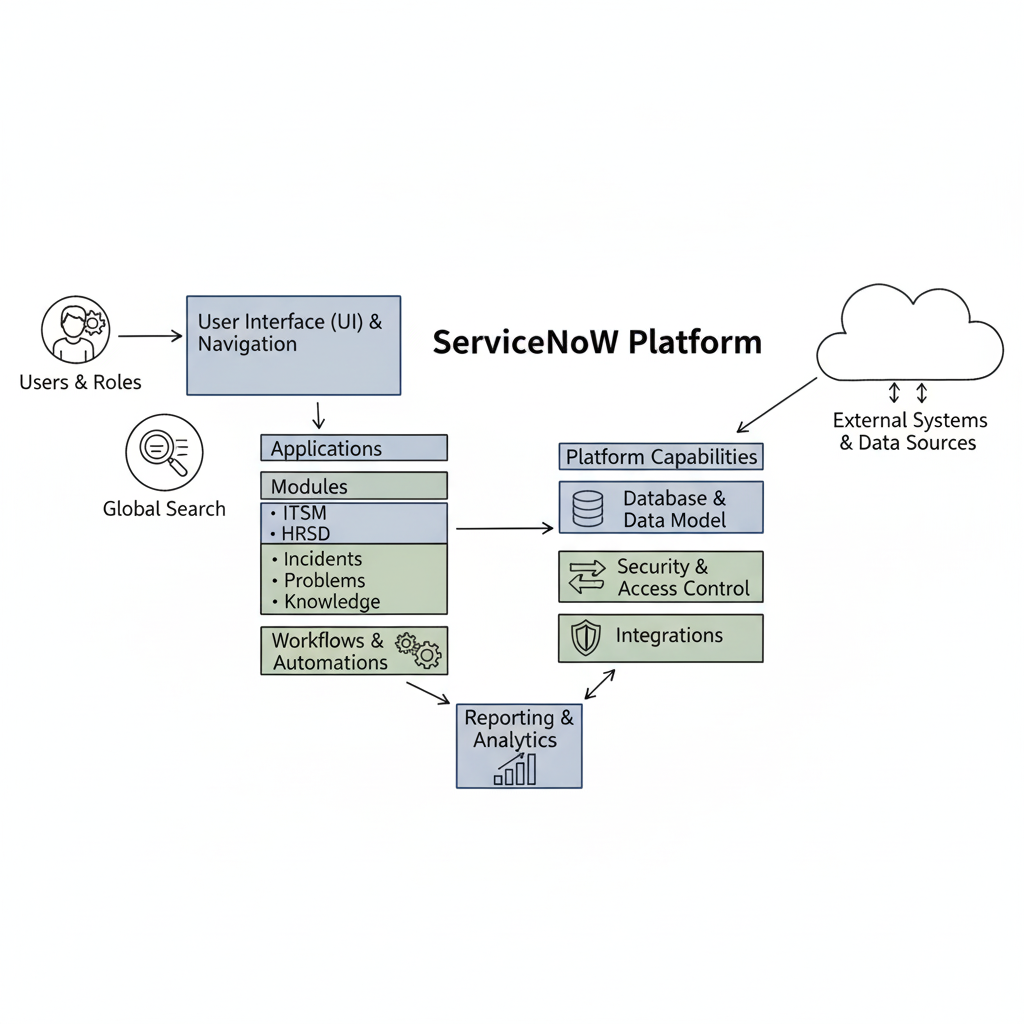
Consider ServiceNow as the sophisticated, high-performance engine powering a modern enterprise's IT services, business workflows, and daily operations. To ensure this engine runs seamlessly and efficiently, you need a skilled administrator who understands its intricate components. The ServiceNow System Administrator (CSA) certification is your official credential, proving you are that indispensable expert.
This certification isn't merely a line on your resume; it's a globally recognized testament to your mastery of the platform’s core architecture and your ability to confidently handle day-to-day administrative tasks. Much like an AWS Certified Solutions Architect or a PMP credential, the CSA demonstrates a deep commitment to understanding fundamental principles—a prerequisite for virtually any role within the ServiceNow domain.
Who Should Earn the CSA Certification?
While the CSA is accessible to anyone eager to learn, it delivers significant career acceleration for specific professional profiles. Whether you're new to the IT landscape or seeking to add a powerful specialization to your existing skill set, this certification unlocks valuable opportunities.
The CSA is an ideal fit for:
- Aspiring ServiceNow Professionals: If you're just entering the ServiceNow ecosystem, the CSA provides the foundational knowledge upon which all other roles and advanced certifications are built. It's your entry pass to a dynamic field.
- Existing IT Professionals: For those in help desk support, network administration, database management, or IT management roles (e.g., ITIL practitioners), the CSA offers a clear pathway to pivot into a specialized, often more rewarding, career focusing on service delivery and automation.
- Career Changers: Individuals seeking to transition into a high-demand tech field will find the ServiceNow System Administrator certification offers a structured, clear route into an industry with consistent growth and innovation.
The Platform Operator's License Analogy
To underscore its importance, consider this analogy: You wouldn't entrust someone to operate a complex financial trading system just because they've read a few manuals. They need a certified operator's license—proof of structured training and the demonstrated competence to manage a business-critical system safely and effectively.
The CSA certification functions as this operator's license for the ServiceNow platform. It unequivocally signals to organizations that you are not just a user, but a qualified professional capable of navigating its complexities, configuring its capabilities, and ensuring its smooth operation for all stakeholders.
Without this certification, establishing the necessary credibility to manage such a business-critical system can be challenging. However, with the CSA, you unlock a new realm of career possibilities. It's the indispensable prerequisite for pursuing more advanced credentials, such as the Certified Application Developer (CAD) and various Certified Implementation Specialist (CIS) certifications, allowing you to specialize further.
Reflection Prompt: How might earning the CSA certification empower you to take on more impactful projects or leadership roles in your current or future IT position?
Deciphering the Blueprint: The ServiceNow CSA Exam Structure
To successfully pass the ServiceNow System Administrator certification, a deep understanding of the exam's blueprint is paramount. This official guide acts as your personalized roadmap, highlighting the most critical topics and enabling you to strategically allocate your study efforts for maximum impact.
Passing isn't about rote memorization; it's about demonstrating the core skills required to effectively administer the platform. Let's explore what you'll encounter on exam day.
Understanding the Exam Format and Logistics
The CSA exam is a standardized, timed assessment. Familiarity with its rules—time limits, question types, and prerequisites—is a significant advantage.
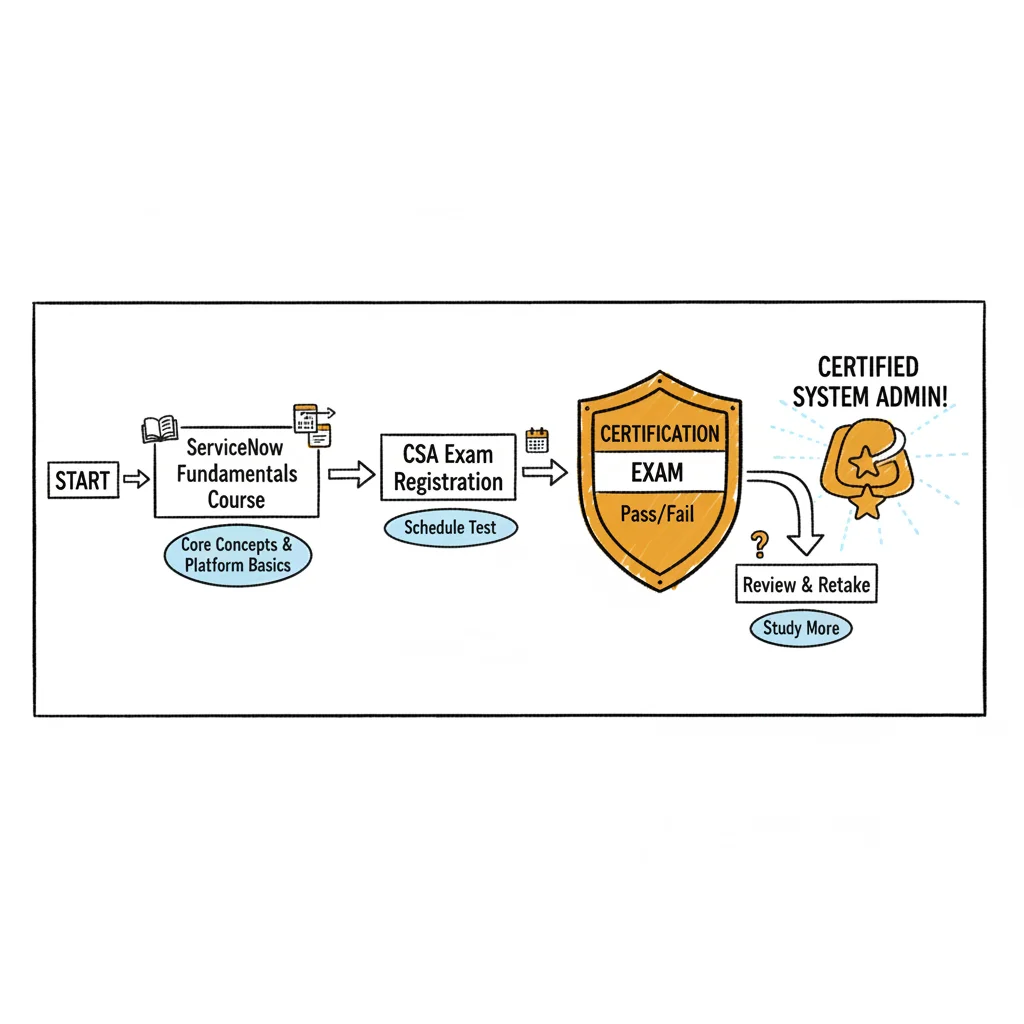
Before you can even register, you must complete the official ServiceNow Fundamentals training course. This mandatory course ensures you have the baseline knowledge. Following completion, you'll face an exam consisting of approximately 60 multiple-choice questions to be answered within 90 minutes. A passing score requires at least 70%. Most successful candidates find that a dedicated study period, often coupled with three to six months of hands-on platform experience (even in a Personal Developer Instance), provides the confidence needed. For more detailed insights into the exam structure, refer to official resources like this one.
The 5 Core Exam Domains You Must Master
The exam is meticulously structured around five main domains, each assigned a specific weighting. This weighting is crucial—it indicates what ServiceNow considers most vital for a system administrator and, consequently, where you'll encounter a greater number of questions.
Here’s a breakdown to help you prioritize your study sessions:
- Database Administration (30%): This is the foundational domain, focusing on the very backbone of the platform. It covers managing tables and records, defining fields, configuring robust access controls (ACLs), and understanding the critical Configuration Management Database (CMDB) – a concept vital in ITIL and other service management frameworks. As a CSA, you'll be responsible for ensuring data integrity and security.
- User Interface & Navigation (20%): This domain addresses everything your end-users interact with. You'll need proficiency in customizing lists and forms, configuring the application navigator, and implementing basic branding to optimize the user experience. Think about how a well-designed dashboard in Azure or AWS simplifies complex operations for users.
- Collaboration (20%): This section explores how teams effectively work within ServiceNow. It tests your knowledge of task management, setting up assignment rules, and configuring event-driven notifications to keep all stakeholders informed and productive. Effective collaboration is key to incident and change management, mirroring principles in project management (PMP).
- Self-Service & Process Automation (20%): Here, you'll learn to streamline operations and empower users. This involves building and maintaining the Service Catalog, implementing basic workflows with Flow Designer, and managing the Knowledge Base for self-help solutions. This directly contributes to improving IT service efficiency, a core tenet of ITIL.
- Introduction to Development (10%): While not a full developer role, CSAs need to grasp basic customization. This domain covers simple client-side scripting, UI policies, and business rules—the tools used to extend and enhance platform functionality. Understanding these basics allows you to implement simple solutions without needing a full developer, similar to how an AWS admin might use Lambda functions for minor automation.
Envision these domains as the interconnected systems of a complex enterprise application. Database Administration is the engine – the most powerful and critical component. User Interface & Navigation represents the intuitive dashboard and controls, enabling users to interact effectively. All domains must function harmoniously to deliver a robust and efficient service management platform.
To provide a clear visual guide, the following table outlines the exam domains, their weightings, and key topics for focused study.
ServiceNow CSA Exam Domain Breakdown
This table offers a high-level overview of the exam's focus areas. Utilize it as a checklist to structure your studies and ensure comprehensive coverage of all critical components.
| Exam Domain | Weighting | Key Topics Covered |
|---|---|---|
| Database Administration | 30% | Table & record management, CMDB, import sets, access control rules (ACLs) |
| User Interface & Navigation | 20% | Application Navigator, branding, list and form configuration, dashboards |
| Collaboration | 20% | Task management, assignment rules, event and email notifications |
| Self-Service & Process Automation | 20% | Service Catalog, Flow Designer basics, Knowledge Base |
| Introduction to Development | 10% | Client scripts, UI policies, business rules, update sets |
Mastering these five domains is your direct route to earning the highly sought-after ServiceNow System Administrator certification. Keep this breakdown readily accessible throughout your preparation—it's the most effective way to study smart and strategically.
Your Step-By-Step Path to CSA Exam Day Success
Achieving your ServiceNow System Administrator certification is a significant professional milestone. A well-defined game plan for the logistical aspects of the journey is crucial. While the process might seem to involve several steps, breaking it down reveals a straightforward path from foundational training to the actual test day.
The absolute first and non-negotiable step is the completion of the official ServiceNow Fundamentals training course. Consider this your intensive boot camp. It provides the essential foundational knowledge and hands-on skills that the entire CSA exam is built upon. Attempting the exam without this course is akin to building a critical system without a stable foundation – it simply won't stand.
Upon successful completion of the Fundamentals course, ServiceNow will issue you an exam voucher. This voucher is your indispensable key to formally registering for the certification exam.
Registering for Your CSA Exam
With your exam voucher in hand, your next destination is the ServiceNow Webassessor portal. This is the centralized platform for scheduling your exam and managing all your ServiceNow certifications. If you're a first-time user, you'll need to create an account and ensure it's correctly linked with your Now Learning profile.
After logging in and redeeming your voucher, you'll make an important decision regarding how you wish to take the exam:
- Online Proctored Exam: This option allows you to take the test remotely from the convenience of your home or office. A proctor will monitor you through your webcam to uphold the integrity and security of the exam process.
- In-Person Testing Center: If you thrive in a quiet, structured, and distraction-free environment, you can book a slot at an official Kryterion testing center.
There's no universally "correct" choice; simply select the option that maximizes your comfort and focus, allowing you to perform at your best.
Expert Advice: Avoid scheduling your exam for the day immediately after completing the Fundamentals course. Grant yourself at least a few weeks. This crucial interval allows you to deeply absorb the material, actively experiment within your Personal Developer Instance (PDI), and rigorously work through practice questions to solidify your understanding.
The five core domains you'll delve into during your study time are deeply interconnected, progressively building from foundational concepts.
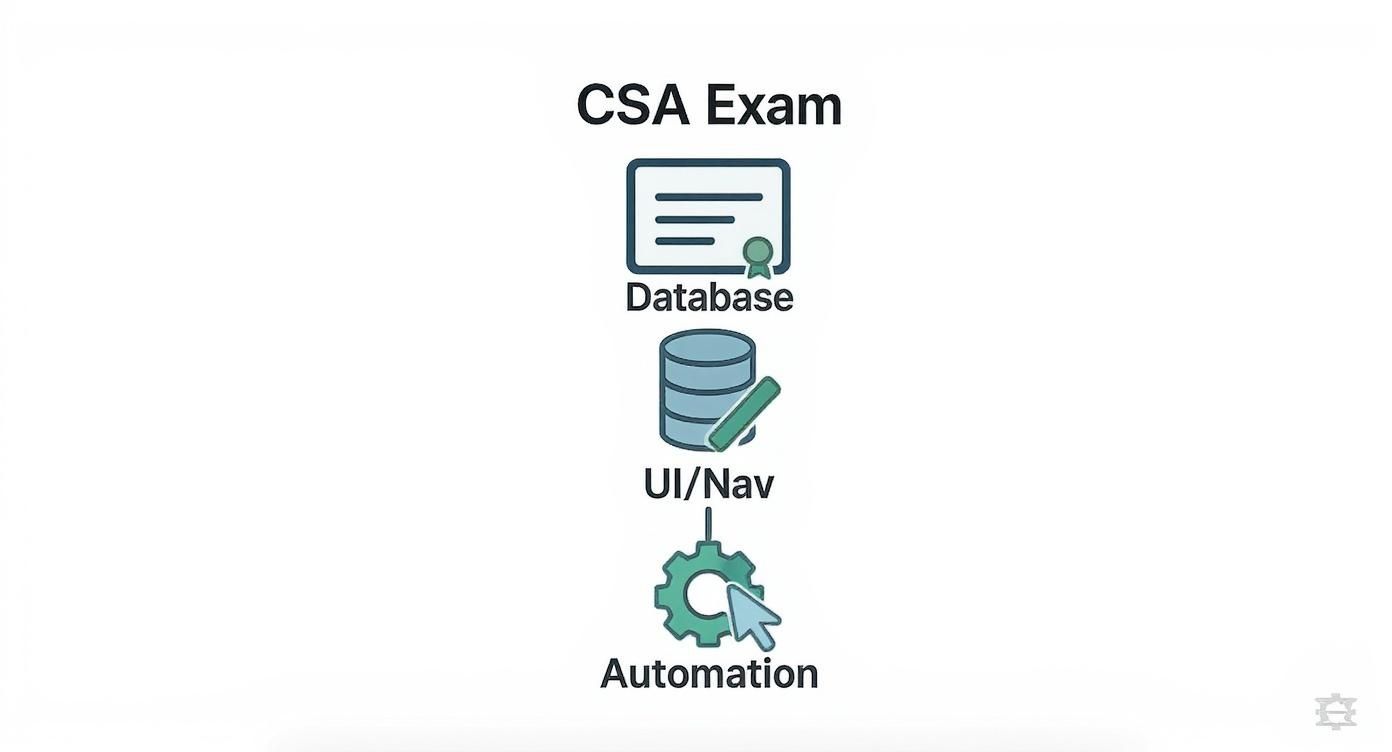
As the infographic illustrates, a solid grasp of database principles and user interface configuration forms the bedrock. Mastering these allows you to confidently tackle more advanced topics such as automation and development introductions.
Final Preparations for Peak Performance
In the final few weeks leading up to your exam, your study strategy should shift from learning new material to solidifying existing knowledge and addressing any remaining weak areas.
This is where high-quality practice tests become invaluable. They not only acclimate you to the question formats, timing constraints, and pressure of the actual exam but also provide critical diagnostic insights. To accurately gauge your readiness, consider taking a comprehensive ServiceNow Certified System Administrator practice exam. It's an excellent method to benchmark your skills, identify specific knowledge gaps, and refine your pacing.
When exam day arrives, ensure you are well-rested and prepared. If you're testing online, thoroughly check your technology setup beforehand. If heading to a testing center, confirm your route and allow ample travel time. Proactively managing these logistical details ensures you can approach the exam feeling calm, confident, and fully prepared to succeed.
Reflection Prompt: What specific strategies will you employ in the final weeks before your exam to ensure you're mentally and logistically prepared?
Crafting Your Winning CSA Study Plan with MindMesh Academy
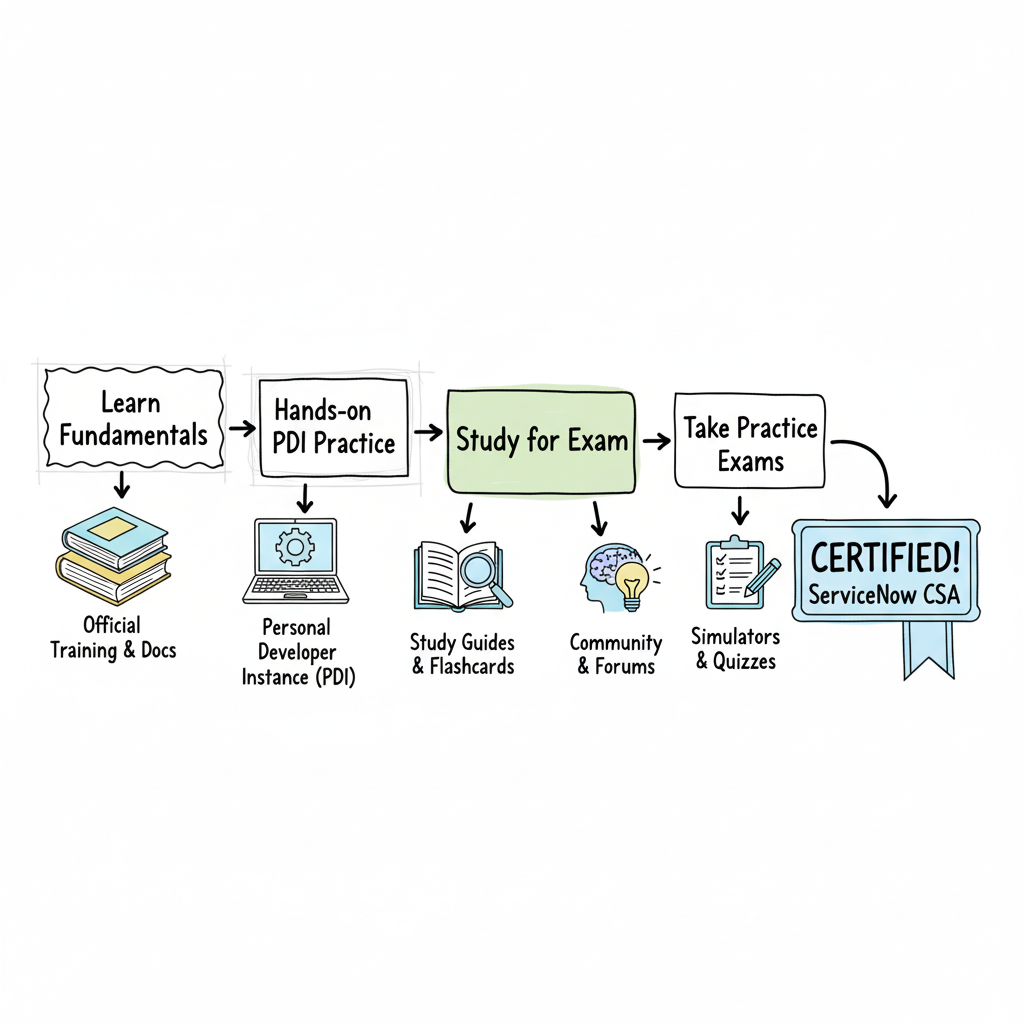
Let’s be realistic: effective preparation for the ServiceNow System Administrator certification isn't about last-minute cramming. It demands building a genuine, hands-on understanding of the platform, which necessitates a strategic and well-structured study plan. A robust plan breaks this significant goal into manageable segments, ensuring you comprehensively cover every exam topic without becoming overwhelmed.
Think of it like training for a professional certification such as the PMP or an advanced Azure credential. You wouldn't just show up on exam day hoping for the best. Instead, you'd follow a meticulously designed schedule, progressively building your knowledge, incorporating diverse study methods, and allocating time for rest and review. Your CSA preparation requires this same thoughtful, disciplined approach to lead you confidently to the finish line.
Laying the Foundation: Essential Study Materials
First and foremost, assemble your toolkit. The absolute cornerstone of your study plan is the official ServiceNow Fundamentals course content. This serves as your primary source of truth, directly aligning with the exam objectives and teaching you core concepts exactly as ServiceNow defines them.
However, your resources shouldn't stop there. Two other tools are indispensable:
- ServiceNow Product Documentation: Consider this the ultimate, authoritative encyclopedia for all things ServiceNow. When a topic within the course seems unclear, the official documentation provides the in-depth details required for full comprehension. It’s akin to referring to official AWS whitepapers for deeper architectural understanding.
- A Personal Developer Instance (PDI): This is your private, risk-free sandbox. Your PDI is a complimentary, fully functional ServiceNow instance where you can build, experiment, break configurations, and, crucially, learn how to fix them—all without impacting production environments.
These three resources—the official course, the product documentation, and your PDI—form a synergistic learning ecosystem. The course outlines what you need to know, the documentation explains why it functions in a particular way, and your PDI is where you actively demonstrate how to implement and manage it.
Structuring Your Study Schedule
One common pitfall is attempting to learn everything simultaneously. A far more effective approach is to tackle the material one domain at a time. Dedicate a full week or more to each major exam domain, allowing ample time to truly master the concepts.
As you construct your schedule, exploring actionable learning plan samples can provide valuable organizational ideas. A highly effective weekly rhythm might look something like this:
- Monday & Tuesday: Immerse yourself in the ServiceNow Fundamentals modules and relevant official documentation for the current week's domain (e.g., Database Administration). Focus on understanding the theoretical concepts.
- Wednesday & Thursday: Shift to hands-on practice in your PDI. Complete the labs and exercises directly related to your theoretical study. Actively build custom tables, configure Access Control Lists (ACLs), or perform an import set simulation. This is where theory translates into practical skill.
- Friday: Self-assessment day. Take a practice quiz or review flashcards focused on the week's topics. This helps identify areas needing further attention and reinforces recall.
- Weekend: Prioritize rest and light review. Allowing your brain to process and consolidate newly acquired information is crucial for long-term retention. To understand the science behind this, explore some of the best study methods for exams.
This cyclical approach keeps you actively engaged with the material, a proven method for embedding information more deeply than passive reading.
The ultimate objective isn't merely to memorize facts for the exam; it's to develop genuine muscle memory and intuitive understanding. When you've configured a UI Policy, created a Business Rule, or built a Catalog Item multiple times in your PDI, the corresponding exam questions become second nature, allowing you to confidently apply your practical experience.
The Power of Hands-On Practice in Your PDI
Theoretical knowledge alone has its limits. The CSA exam is specifically designed to test your ability to apply what you know, which is precisely why hands-on practice in your Personal Developer Instance is the single most critical component of your study plan. Your PDI is where abstract theory transforms into tangible skill.
Avoid aimless clicking. Instead, create small, focused projects directly tied to the exam domains:
- Database Administration: Challenge yourself to build a new custom application containing three interconnected tables. Define appropriate relationships between them and then secure specific fields or records using granular ACL rules.
- User Interface & Navigation: Design a custom view for the Incident form that displays only five key fields relevant to a specific user role. Subsequently, create a UI Policy to make the "Resolution Code" field mandatory only when an incident's state transitions to "Resolved."
- Self-Service & Process Automation: Construct a simple catalog item for ordering a new peripheral (e.g., a computer mouse). Utilize Flow Designer to create an approval workflow that first sends a request to a manager before automatically generating a task for the fulfillment team upon approval.
This active, problem-solving approach to learning is far more impactful than passive consumption of material. It forces you to troubleshoot, critically analyze, and truly understand how all the disparate pieces of the ServiceNow platform integrate—which is precisely the expertise of a highly effective ServiceNow Administrator. By making the PDI the core of your study plan, you're not just preparing for a test; you're building the practical skills required for the job itself.
How CSA Certification Elevates Your Career and Earning Potential
Earning the ServiceNow System Administrator certification transcends merely passing an exam—it's a calculated, strategic investment in your professional future. Consider it a master key that unlocks doors previously inaccessible, sending a clear, undeniable message to employers: you possess the validated skills to competently manage one of the most powerful enterprise platforms available.
With the CSA credential firmly in your grasp, you immediately become a highly attractive candidate for a diverse range of in-demand roles. It serves as the indispensable starting point for positions such as:
- ServiceNow Administrator: The most direct career path, where you will be responsible for the daily management, configuration, and smooth operation of the platform.
- Platform Consultant (Junior/Associate): In this capacity, you'll guide businesses in optimizing their use of ServiceNow to achieve specific organizational objectives, similar to a junior Azure consultant advising on cloud solutions.
- ServiceNow Developer (Junior): The CSA provides the robust foundational knowledge necessary before you can progress to building custom applications and scripting solutions within the platform.
The Tangible Financial Impact on Your Earning Potential
Let's address the financial benefits. The economic upside of becoming certified is substantial and well-documented. Possessing the CSA credential almost invariably correlates with a higher earning potential, making it one of the most valuable additions to your professional arsenal. It distinguishes you from a generalist IT professional, positioning you as a sought-after specialist.
Statistical data consistently supports this. One comprehensive study revealed that 69% of professionals who obtained a ServiceNow certification experienced significant positive shifts in their careers. Nearly a third secured a promotion within a year, and 31% reported a discernible salary increase. This evidence firmly establishes the CSA as a proven catalyst for career advancement.
This compelling data illustrates that investing in the CSA is not an expense but a valuable asset that yields significant returns. The certification empowers you with the confidence and leverage to command a competitive salary and pursue more senior, impactful positions.
When certified, you're in a significantly stronger position during salary negotiations. To ensure you're compensated fairly, it's beneficial to refine your effective salary negotiation strategies. The CSA places you within a select group of highly valued professionals. You can further explore how this credential compares to others in our guide to the top 10 high-paying IT certifications for 2025.
A Launching Pad for Advanced Specializations
The CSA is the starting line, not the finish line. It is the mandatory first step for nearly every other advanced ServiceNow certification. Visualize it as constructing the foundation of a building—you cannot erect the walls or roof without a solid, stable base.
Once you become a Certified System Administrator, a vast world of specialization unfolds, enabling you to steer your career towards areas that align most with your passion and expertise. This is much like the progression from an AWS Associate to a Professional certification path.
Your potential next steps could include:
- Certified Application Developer (CAD): Ideal for those who enjoy coding and aspire to build bespoke applications on the ServiceNow platform.
- Certified Implementation Specialist (CIS): This encompasses an entire family of certifications, each hyper-focused on a specific ServiceNow product, such as IT Service Management (ITSM), Customer Service Management (CSM), or HR Service Delivery (HRSD).
- Certified Technical Architect (CTA): This represents the pinnacle of ServiceNow expertise, designed for true platform masters who architect complex, large-scale solutions for major enterprises.
Each of these advanced certifications translates into even greater career opportunities and enhanced earning potential. Yet, the entire journey begins with the ServiceNow System Administrator certification, providing the indispensable foundational knowledge you'll continuously build upon for years to come.
Key Resources and Tools for CSA Exam Success
Preparing for the ServiceNow System Administrator certification extends beyond simply "hitting the books." It requires the right arsenal of tools and resources. Think of it like a master mechanic's toolbox—you can't effectively repair an engine with just a single wrench. To truly ace the CSA exam, you need a diverse mix of official guides, intensive hands-on practice, and the collaborative support of the community.
Your study plan effectively condenses into three critical essentials: the official ServiceNow training materials, your dedicated Personal Developer Instance (PDI), and a robust set of practice exams. These are your non-negotiables. Getting these three elements right fundamentally sets you on the path to success.
Mastering the Official ServiceNow Resources
When embarking on your ServiceNow learning journey, always prioritize going directly to the source. ServiceNow provides several key resources that must form the bedrock of your study plan, ensuring your knowledge is accurate and directly aligned with exam objectives.
- ServiceNow Product Documentation: This is, in essence, the definitive manual for all aspects of ServiceNow. Whenever a concept in the Fundamentals course appears complex or warrants deeper understanding (e.g., the intricacies of Access Control Lists (ACLs) or the structure of the CMDB), the official documentation is your ultimate reference. It provides the granular details required for true mastery.
- ServiceNow Community Forums: Remember, you're not undertaking this journey alone. The vibrant community forums are an invaluable repository of knowledge. Here, you can find answers to highly specific technical questions, observe how others have resolved challenges similar to yours, and gather invaluable tips from seasoned professionals who have navigated the platform for years.
Diligent use of these resources guarantees that your knowledge is not only factually correct but also congruent with ServiceNow's recommended best practices—a crucial element for successfully tackling scenario-based questions on the exam.
Your Essential Training Ground: The PDI
Let's be unequivocally clear: Your Personal Developer Instance (PDI) is the single most important study tool at your disposal. It's a free, fully functional ServiceNow instance entirely for your use. While reading about how to create a catalog item is beneficial, actually building one yourself is an entirely different and more effective learning experience.
Your PDI is the crucible where theoretical understanding is forged into practical skill. It is your safe sandbox. Enter it, build, experiment, and do not fear making mistakes. The profound learning truly occurs when you troubleshoot and fix what you've broken, all without any real-world consequences. This hands-on, iterative work cultivates the "muscle memory" essential for confidently navigating exam questions and real-world administrative tasks.
Don't limit yourself to just the labs provided in the Fundamentals course. Challenge yourself with small, self-designed side projects. For instance, attempt to build a simple application to track internal office supplies. Such a project compels you to create custom tables, design user-friendly forms, implement approval workflows, and configure notifications—thereby covering a significant portion of the exam domains in an integrated, practical manner.
Validating Your Knowledge with Practice Exams
So, how do you definitively know when you're truly prepared for the actual exam? Through practice exams. They are absolutely critical for familiarizing yourself with the authentic test environment. You'll become adept at handling multiple-choice and multiple-select question formats and, crucially, learn to manage your time effectively within the demanding 90-minute limit.
But practice tests serve a purpose far beyond mere time management. They are powerful diagnostic instruments that pinpoint your precise weaknesses. If you consistently struggle with Database Administration questions, you know exactly which domain requires further review. They compel you to actively recall information rather than passively absorb it, a far more effective method for long-term memory retention. Leverage these tests as a strategic diagnostic tool to refine your approach in the weeks before the big day, enabling you to approach the exam with confidence, ready to earn your ServiceNow System Administrator certification.
Reflection Prompt: Beyond the official course, how will you actively integrate the ServiceNow Product Documentation and your PDI into your daily study routine to maximize practical skill development?
Got Questions? MindMesh Academy Has Answers
Even with the most comprehensive study plan, it's natural to encounter questions as you progress toward your ServiceNow System Administrator certification. Let's address some of the most frequently asked questions that arise for aspiring CSAs.
How Much Experience Do I Really Need to Pass the CSA?
ServiceNow officially recommends 3-6 months of hands-on experience, but it's important not to get overly fixated on the specific number. What truly matters is the quality and intensity of that experience.
The core objective is to achieve genuine comfort and proficiency with the platform's daily operations. This implies being able to confidently handle routine user and data administration, and navigate core applications like Incident, Problem, and Change Management without hesitation. If you've consistently dedicated time to practicing in a Personal Developer Instance (PDI), actively building configurations, and troubleshooting scenarios, that focused effort can absolutely be considered meaningful and relevant experience.
What Happens If I Fail the Exam on My First Attempt?
First and foremost, understand that this can happen to anyone, and it should not discourage you. ServiceNow has a clear and straightforward retake policy.
You are permitted up to three attempts to pass the exam. After an unsuccessful attempt, there is a mandatory waiting period before you can register again. Crucially, each retake requires a new exam voucher. The key strategy after a failed attempt is to meticulously review the section-level feedback provided in your results to pinpoint your exact weak areas. Then, dedicate focused study efforts to those specific topics before scheduling your next attempt.
It's vital to consistently remind yourself of the significant return on investment this effort promises. Holding a CSA certification directly and positively impacts your career trajectory and earning potential. As of 2025, the average salary for related ServiceNow roles in the United States typically ranges around $82,495. This credential is far more than just a piece of paper; it's a powerful signal to employers that you possess valuable, in-demand skills in a critical enterprise technology. For a deeper dive into ServiceNow career paths and salary trends, you can review the full research available on cxtoday.com.
We trust these answers address your most pressing questions and help you maintain focus and motivation on your certification journey.
At MindMesh Academy, we are dedicated to equipping IT professionals with the precise tools they need for certification success and long-term career growth. We offer expertly curated resources and comprehensive practice exams specifically designed to help you master the core concepts for both the CSA exam and your real-world professional responsibilities. Explore our high-quality study materials and prepare with confidence at ServiceNow CSA Practice Exams.
Ready to Get Certified?
Prepare with expert-curated study guides, practice exams, and spaced repetition flashcards at MindMesh Academy:

Written by
Alvin Varughese
Founder, MindMesh Academy
Alvin Varughese is the founder of MindMesh Academy and holds 15 professional certifications including AWS Solutions Architect Professional, Azure DevOps Engineer Expert, and ITIL 4. He's held senior engineering and architecture roles at Humana (Fortune 50) and GE Appliances. He built MindMesh Academy to share the study methods and first-principles approach that helped him pass each exam.