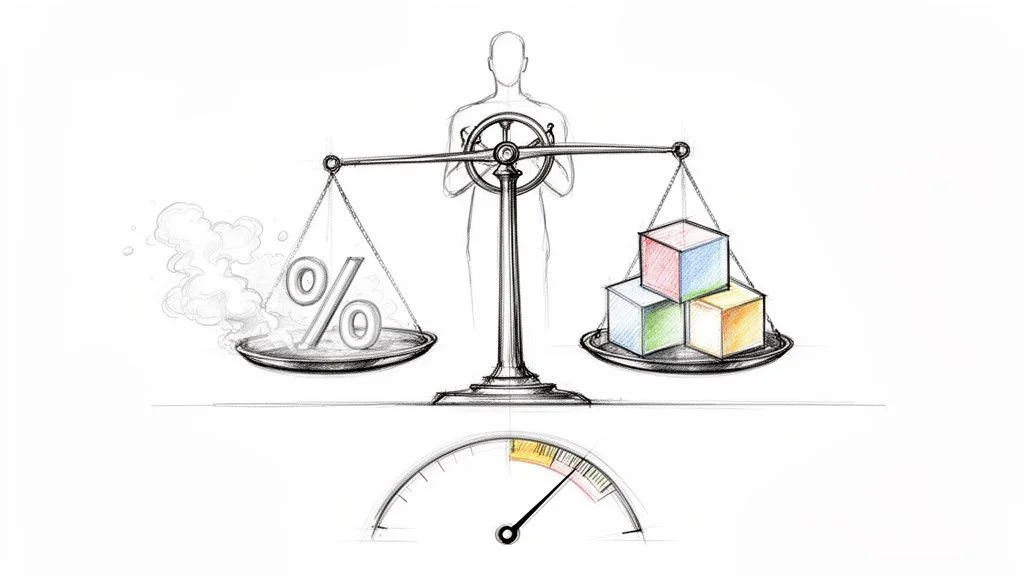
Passing score PMP exam: What You Need to Know
PMP Exam Passing Score: What You Need to Know
For IT professionals pursuing the Project Management Professional (PMP) certification, a common question arises: "What's the passing score?" Let's clarify this immediately: there is no fixed percentage you need to achieve to pass the PMP exam. The Project Management Institute (PMI) removed the practice of publishing a specific pass rate, like the historical "61%", many years ago. Therefore, any source claiming to know an exact numerical target is providing outdated information.
At MindMesh Academy, we understand that many IT professionals preparing for high-stakes certifications like the PMP often seek clear benchmarks. However, the PMP exam's scoring mechanism is far more sophisticated, focusing on a holistic assessment of your project management competency rather than a simple percentage.
The Myth of the PMP Exam Passing Score
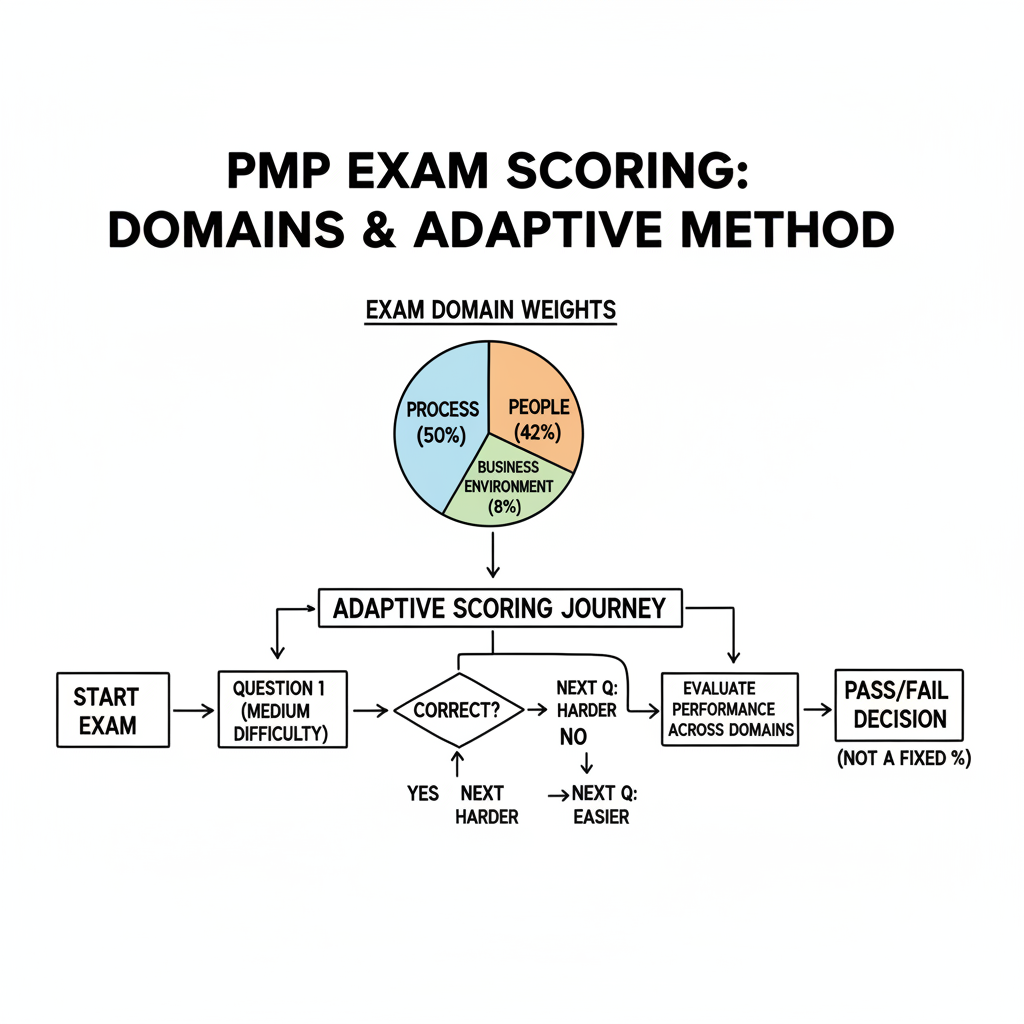
Many aspiring PMP candidates stumble upon old forum posts or articles that suggest a "magic number" for passing. This creates a misleading target, causing individuals to fixate on an arbitrary percentage instead of genuinely developing the skills and understanding required for effective project leadership. The reality, as we'll explore, is much more nuanced and, ultimately, a fairer reflection of professional capability.
Consider the PMP exam less like a traditional multiple-choice test and more like a high-fidelity flight simulator for a pilot. A pilot doesn't earn their certification merely by getting, say, 75% of questions correct. Instead, they must demonstrate their ability to navigate a wide array of situations—from routine operations to unexpected crises—proving their comprehensive competence under pressure.
From Simple Percentages to Psychometric Analysis
The PMP exam operates on a similar principle. PMI employs a rigorous methodology called psychometric analysis to determine if a candidate meets the certification standard. While "psychometric analysis" might sound complex, its core purpose is straightforward: to ensure that every candidate is assessed against the same professional benchmark, regardless of the specific questions they encounter on their unique exam. This method is prevalent in many modern, high-stakes IT certifications, including some from AWS, Azure, and ITIL, where the focus is on practical application rather than rote memorization.
Let's quickly review how the exam scoring paradigm has shifted over time.
PMP Exam Scoring At a Glance
| Scoring Aspect | Historical Method (Pre-2006) | Current Psychometric Model |
|---|---|---|
| Pass/Fail Basis | Based on a fixed percentage (e.g., 61% correct answers). | Determined by overall demonstrated competency against a set standard. |
| Question Value | All questions were weighted equally. A correct answer was a point. | Questions have different difficulty levels. Harder questions are worth more to the overall score. |
| Fairness | Could be unfair if one candidate received an unusually hard set of questions, impacting their fixed percentage. | Balances exam difficulty, ensuring all candidates face a statistically similar challenge level. |
| Focus | Encouraged rote memorization of facts and processes to hit a target percentage. | Measures the ability to apply knowledge, critical thinking, and judgment in realistic, complex scenarios. |
This modern approach offers several crucial advantages for both the candidates and the integrity of the PMP credential:
- It accounts for question difficulty. Not all questions are created equal. Successfully navigating a complex, multi-part scenario question demonstrates a significantly higher level of skill than recalling a simple definition.
- It ensures fairness. Since each exam draws a unique mix of questions from a vast item bank, psychometric standardization levels the playing field, ensuring comparable difficulty for all test-takers.
- It measures real-world readiness. This system is designed to assess your capacity to apply project management principles in practical, real-world contexts, which is far more valuable than simply reciting memorized facts.
The real shift in thinking needs to happen in your approach. Stop asking, "What score do I need?" and start asking, "Have I truly mastered the skills of a competent project manager capable of delivering value?" This mindset is everything for passing the PMP and excelling in your career.
Because the scoring is so fundamentally different now, your study strategy must also adapt. Chasing an arbitrary percentage is a misdirection of valuable time and effort. The goal is not to hit an imaginary numerical target but to build a robust, well-rounded understanding across all project management domains. For a deeper look at effective preparation, you can learn more about how to pass the PMP exam with our targeted study tips. This will equip you for any scenario the exam presents—much like a pilot prepared for diverse atmospheric conditions.
A Look Back: How PMP Exam Scoring Has Changed
To truly grasp why there is no magic number to pass the PMP exam today, it's beneficial to understand its historical context. For many years, the rules were straightforward and publicly disclosed: candidates needed to achieve a specific percentage. However, while this system was clear, it often fell short in terms of fairness and its ability to genuinely measure practical skill, which ultimately led PMI to overhaul it.
In earlier eras, PMP scoring was predictable. Knowing the exact target percentage made studying feel akin to cramming for a college final. The inherent drawback was that this focus on a fixed number often incentivized rote memorization over the development of a real, practical understanding of how to manage complex projects effectively. This shift mirrors how many top-tier IT certifications have evolved to test practical application rather than just theoretical knowledge.
The Era of the Fixed Percentage
For years, the PMP certification was defined by a single number. Before 2005, the PMP Handbook explicitly stated that candidates needed to achieve 61% of the questions correctly to pass. This number became ingrained in the collective memory of the project management community, explaining its persistence in outdated articles and forum discussions.
A brief, tumultuous period followed in mid-2005 when PMI abruptly raised the passing score to a challenging 81%, making the exam significantly harder overnight. Following considerable industry feedback, they quickly reverted it to 61% by December of the same year. This sudden adjustment highlighted the limitations of a fixed-percentage model and signaled impending, more fundamental changes.
Soon after, in 2006, PMI ceased publishing any specific passing score, a policy that remains in effect today. If you're interested in the finer details, researching the detailed timeline of these PMP scoring changes can provide the full historical perspective.
Why PMI Ditched the Public Score
Moving away from a fixed percentage wasn't about creating an enigma. It was a strategic decision to enhance the credibility and meaningfulness of the PMP certification. Adhering to a single, public number presented several significant challenges that diminished the credential's true value:
- It encouraged "teaching to the test." Training organizations and candidates could narrow their focus to memorizing just enough information to clear the minimum bar, rather than cultivating the deep, practical skills essential for job performance.
- It couldn't account for varying exam difficulty. Not all exam forms are created with precisely equal difficulty. A rigid percentage placed candidates who received a marginally tougher set of questions at an unfair disadvantage.
- It didn't reflect real-world competence. A truly effective project manager isn't merely someone who can recite definitions. They are individuals capable of applying that knowledge, exercising judgment, and solving complex, often unpredictable problems in dynamic environments.
By eliminating the fixed score, PMI fundamentally shifted the exam’s emphasis from a memory test to a genuine assessment of professional competence. This evolution ensures the PMP continues to serve as a global benchmark for project management expertise, much like other leading certifications require demonstrating mastery beyond simple recall.
The change was a necessary move to protect the PMP's value and align it with modern psychometric standards. It compelled everyone to stop asking, "What do I need to score?" and start asking, "Am I a truly competent project manager, ready to lead?"
This new mindset necessitated a more sophisticated scoring system—one that could accurately measure a candidate's abilities, irrespective of the specific exam version they took. This imperative led directly to the psychometric analysis model used today, ensuring every candidate is measured against the same high professional standard.
How PMI Actually Calculates Your PMP Score
Alright, let's demystify how the Project Management Institute (PMI) actually determines if you pass the PMP exam. If there’s no magic number, what’s the secret? The answer lies in its sophisticated, evidence-based method: psychometric analysis.
While it sounds intricate, the fundamental principle is simple. Passing isn't about accumulating a certain percentage of correct answers; it's about demonstrating you possess the core competencies required of a project manager. This approach is common in many advanced professional certifications, including those for IT architects or cybersecurity specialists, where the ability to apply knowledge in diverse scenarios is paramount.
Think of it like a role-playing video game. You wouldn't earn the same number of experience points for defeating a common, low-level foe as you would for successfully overcoming a challenging boss, right? The PMP exam operates on an analogous principle: some questions inherently carry more weight than others.
It’s Not Just How Many You Get Right, But Which Ones
The cornerstone of the psychometric model is that each question contributes differently to your overall score, largely based on its assessed difficulty and its alignment with critical PMP competencies. A straightforward question asking for a simple definition might be comparable to that low-level foe. However, a complex, multi-layered scenario question that demands critical thinking, weighing various processes, and making a judgment call—that's your boss battle, and it significantly impacts your final assessment.
This is precisely why merely counting correct answers on a practice test can be misleading and does not accurately predict your real exam outcome.
So, who determines what's "hard"? PMI convenes panels of experienced, PMP-certified professionals from diverse industries and global regions. These experts meticulously review, discuss, and rate each question. This process establishes a robust baseline for the knowledge, skills, and judgment a proficient project manager should possess, ensuring the exam remains grounded in real-world challenges.
This image effectively illustrates the evolution of the PMP scoring philosophy over the years.
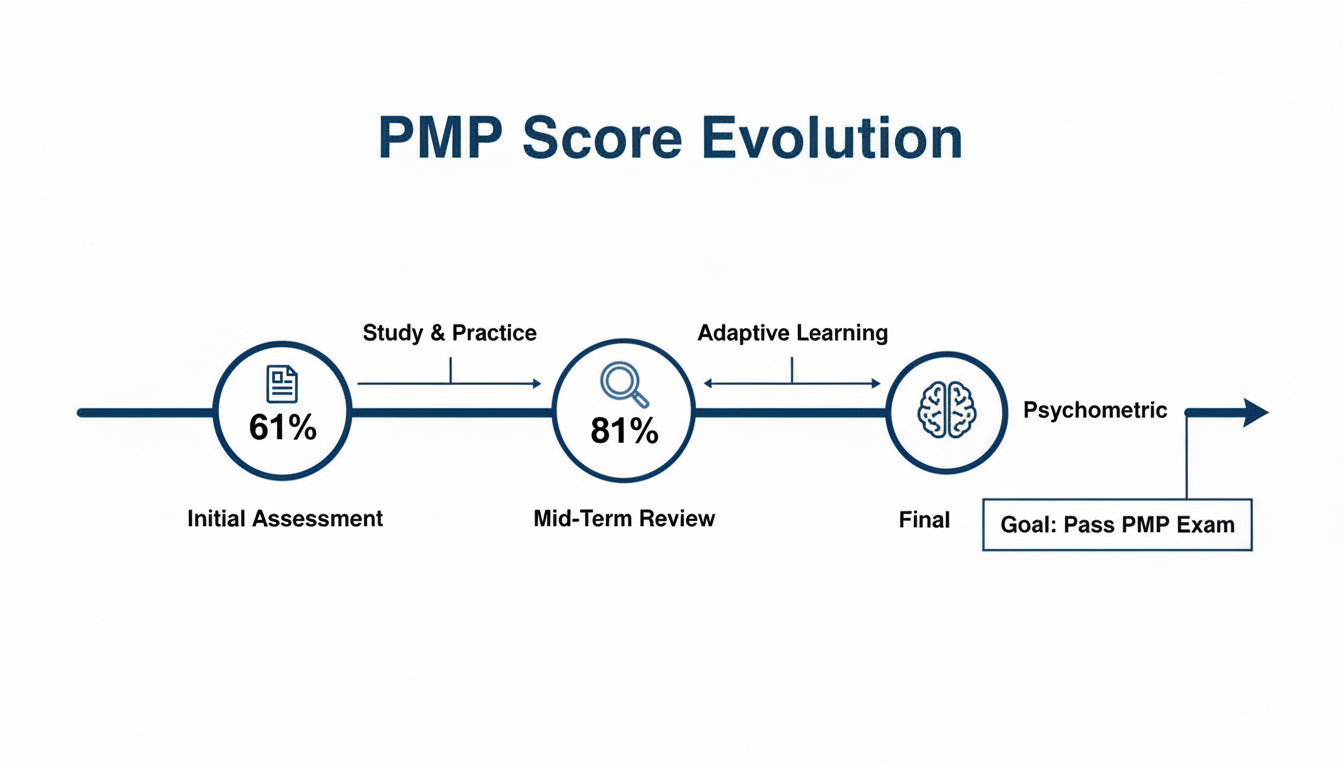
We've progressed significantly from the era of a fixed 61% pass mark, and even the brief, notoriously stringent 81% period. Today's system is far more dynamic, fair, and reflective of true professional competence.
Defining the "Cut Score"
Leveraging the extensive data from these expert panels, PMI establishes what is known as a "cut score." This isn't a percentage, but rather a specific threshold on a psychometric proficiency scale that represents the minimum level of competence required to earn the PMP certification. Your singular objective on exam day is to demonstrate that your abilities meet or exceed this carefully determined threshold.
Ultimately, the PMP exam is designed to answer one fundamental question: "Does this candidate possess the skills, knowledge, and professional judgment required to successfully lead projects in the real world, adhering to PMI's global standards?" It’s about demonstrating applied proficiency, not simply hitting an arbitrary number.
This sophisticated system explains why two individuals could answer the exact same number of questions correctly, yet one passes while the other does not. The differentiator lies in the difficulty and weighting of the specific questions each person received. The candidate who correctly answered more of the higher-value, "heavyweight" questions is the one deemed to have met the required standard.
Since PMI discontinued publishing a passing score, estimates suggest that demonstrating competency in the 60–65% range on a well-calibrated practice exam might indicate readiness, but this is an approximation, not a guarantee. You can read more about how question difficulty impacts PMP results to appreciate the nuances of how question weighting affects the final outcome. Chasing a specific percentage remains a flawed strategy.
How This Should Change Your Study Plan
Recognizing that the PMP exam prioritizes deep understanding and practical application over rote memorization should fundamentally reshape your preparation strategy.
Your ultimate goal isn't just to accumulate facts; it's to develop the ability to apply those facts and principles within ambiguous, complex project situations.
- Embrace Scenario-Based Questions: Dedicate the majority of your practice time to questions that mirror the real exam's situational style. These are your "boss battle" questions, demanding critical thinking.
- Honestly Assess Your Weaknesses: Utilize practice test results to precisely pinpoint the domains or knowledge areas where you struggle, then dedicate focused extra time to mastering them.
- Always Ask "Why?": Don't simply learn a tool, technique, or process. You need to understand why it is used, when it is most appropriate, and how you would choose it over alternative options in a given project context.
Reflection Prompt: Think about a complex IT problem you've solved recently (e.g., troubleshooting a cloud deployment, managing a software upgrade). Was success about knowing a single fact, or applying multiple principles, diagnosing issues, and making judgment calls? The PMP exam tests for that deeper, applied understanding.
At its core, the psychometric model is designed to reward genuine expertise. It's built to identify project managers who can think critically, adapt to challenges, and lead with confidence—and that's exactly the caliber of professional the PMP credential aims to validate.
Decoding Your PMP Exam Performance Report
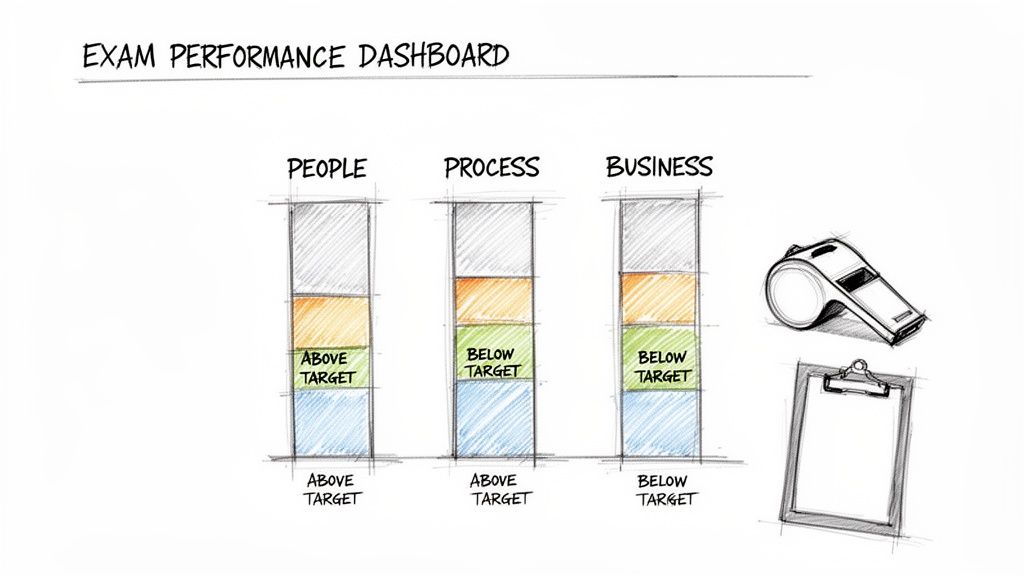
When the exam timer finally reaches zero, and the moment of truth arrives, PMI provides a comprehensive performance report. This report is an invaluable tool for your professional development, regardless of the outcome. It doesn't simply provide a percentage; instead, it meticulously breaks down your performance across the three core domains: People, Process, and Business Environment.
Consider this report your personalized post-game analysis from a seasoned coach. It's not just about the win or loss; it's about understanding precisely where your strengths lie and where you may have faltered. This detailed feedback is crucial, especially if a retake is necessary, as it provides an exact roadmap for focused study and improvement.
Understanding the Four Performance Ratings
Your performance report will categorize your results in each domain—People, Process, and Business Environment—using one of four distinct ratings. Grasping the true meaning of these ratings is the essential first step in leveraging this feedback effectively.
Let’s use a sports analogy. Imagine a coach evaluating a basketball player's game across three key areas: dribbling, shooting, and defense.
-
Above Target: This is the highest possible rating, signifying exceptional performance within that domain. In our analogy, this is the all-star player who consistently executes complex plays and sinks crucial shots under pressure. You didn't just meet the standard; you significantly exceeded it.
-
Target: This represents a solid, proficient level of performance—the benchmark you should aim for across all domains. It indicates you have thoroughly demonstrated the competence PMI expects. This is your reliable player who has mastered the fundamentals, is consistently skilled, dependable, and meets all performance expectations.
-
Below Target: This rating means your performance fell short of the minimum acceptable standard for that domain. While not a catastrophic failure, it clearly flags an area requiring significant improvement. This is akin to a player whose defense is noticeably weak, potentially making them a liability on the court.
-
Needs Improvement: This is the lowest rating, highlighting a substantial knowledge or skill gap within the domain. It indicates you were well below the acceptable professional standard. In basketball terms, this player struggles with the absolute basics and requires fundamental coaching to become competitive.
How Domain Performance Creates Your Final Result
Your final pass or fail decision is not based on acing a single domain, but rather on a holistic evaluation of your performance across all three. While achieving "Above Target" everywhere is not strictly necessary, a balanced performance is your most reliable path to success. Consistently hitting "Target" across People, Process, and Business Environment is a very strong indicator of a passing result.
The PMP exam assesses your overall capability as a project manager. A truly exceptional performance in the larger domains can sometimes compensate for a weaker showing in a smaller one, but striving for a consistent 'Target' level across all three is the most reliable strategy for certification.
For example, scoring "Below Target" in the Business Environment domain, which constitutes only 8% of the exam content, might be recoverable if you achieve "Above Target" in the much heavier People (42%) and Process (50%) domains. Conversely, a "Below Target" in the massive Process domain creates a very deep deficit that is incredibly challenging to overcome. Your final result is essentially a weighted summary of your demonstrated skills.
This detailed feedback shifts the focus from chasing some mythical passing percentage and squarely places it where it belongs: on building real, measurable professional competence.
At MindMesh Academy, our dashboard is meticulously designed to mirror this exact feedback loop. As you engage with our practice exams and learning modules, you can continuously track your performance across the same three PMP domains. This capability allows you to identify your weak spots long before the actual test, empowering you to address "Below Target" areas with focused practice and transform them into strengths, thereby cultivating the comprehensive competence PMI demands.
Preparing Strategically Without Chasing a Score
Having debunked the myth of a "magic percentage," your path forward for PMP preparation actually becomes much clearer. Once you detach from the idea of hitting a specific number, you can pivot to focusing on the one thing you genuinely control: addressing your individual knowledge gaps. This transition moves you from abstract theory to smart, targeted action.
Effective preparation is about replacing guesswork with objective data about your own performance. You're not merely cramming to hit an imaginary passing score; you're systematically building authentic competence. True exam readiness stems from methodically identifying your weaknesses and diligently transforming them into strengths, enabling you to approach the exam center with unwavering confidence. This strategic approach is crucial not only for the PMP but for any major IT certification where practical application is tested.
A Data-Driven Approach to PMP Prep
Consider this: the most successful PMP candidates treat their study period like a project in itself. They establish a baseline, identify high-risk areas (their weakest domains), and then execute a well-defined plan to elevate those areas to proficiency. The official PMI performance report provides this blueprint after the exam.
A modern study platform should provide you with that same critical feedback loop long before you sit for the real test. This empowers you to diagnose and rectify issues early, preventing unpleasant surprises on exam day. Frankly, this methodical approach is significantly more effective than simply reading the PMBOK® Guide cover-to-cover and hoping for the best.
Leading platforms, for instance, offer dashboards that provide a clear, visual map of your performance across all the crucial PMP domains (People, Process, Business Environment). This kind of visual feedback immediately highlights where you're solid (Target or Above Target) and precisely where you need to concentrate your efforts (Below Target). This makes your study time precise and incredibly effective.
From Below Target to Exam Ready
Receiving a "Below Target" rating on a practice test is not a setback; it's a valuable insight. It serves as a clear, flashing signpost, directing you to precisely where your energy should be concentrated. A strategic study plan leverages this information, transforming it into a focused path for improvement, ensuring every hour you dedicate to studying yields maximum benefit.
Here’s how you can translate that data into concrete action:
- Isolate the Weak Domain: If you're consistently scoring "Below Target" in the Process domain, this becomes your top priority. Given this domain constitutes a substantial 50% of the exam, a weakness here presents a significant risk.
- Drill Down into Subtopics: Okay, so it’s Process. But what within Process? Are you struggling with risk management, procurement, stakeholder engagement, or schedule management? Get as specific as possible.
- Utilize Focused Practice: Dedicate entire study sessions to these specific subtopics. Intensively practice questions and simulations that force you to apply those concepts in various scenarios, reinforcing your understanding.
The goal isn't necessarily to achieve perfection in every single topic. It's about building a balanced, robust competency across all domains, ensuring no single area is weak enough to jeopardize your overall passing result. Aim consistently for 'Target' across the board.
This systematic approach is considerably more efficient than simply burning yourself out by repeatedly taking full-length exams. A structured plan, such as the one detailed in our PMP certification study plan guide, helps you organize your time effectively and ensures comprehensive coverage of all necessary topics. It’s all about studying smarter, not just harder.
Building Competence with Evidence-Based Techniques
Many effective learning platforms integrate proven learning science to help you systematically reinforce weaker areas. They don't just identify what's wrong; they provide the tools and strategies to fix it.
For instance, techniques like Spaced Repetition prompt you to review challenging concepts at scientifically calculated intervals. This method is highly effective for transferring information from short-term to long-term memory, ensuring you don't just memorize facts temporarily but truly understand and retain them.
Additionally, adaptive learning paths adjust to your performance in real-time. As you demonstrate mastery of a concept, the system introduces new, more challenging questions. Conversely, if you struggle, it dials back to provide more foundational practice until you're ready to advance. This ensures every minute you spend studying is precisely focused on what you need most, fostering genuine skill development and unshakable confidence for exam day.
Common Questions About the PMP Passing Score
Even after understanding that PMI has moved away from a simple passing percentage, it’s entirely normal to have lingering questions about the PMP exam's scoring mechanics. A thorough grasp of how the exam works helps you build a more strategic study plan and approach the test center with greater confidence.
Let's address some of the most frequently asked questions from PMP candidates and provide clear answers.
Can I Pass with a Below Target Score in One Domain?
The concise answer is yes, it is possible—but it introduces a significant element of risk. The PMP exam is designed to assess your overall competence as a project manager. An exceptional performance in one domain can sometimes be enough to offset a weaker showing in another and propel you across the finish line.
However, you must consider the specific weighting of each domain on the exam. The PMP exam content is distributed as follows:
- Process: This domain is substantial, accounting for 50% of the exam questions.
- People: This domain covers 42% of the questions.
- Business Environment: This is the smallest domain, making up 8% of the questions.
As you can infer, achieving a "Below Target" in the Business Environment domain is far easier to recover from than struggling significantly with the massive Process domain. If you score "Above Target" in both People and Process, you could likely still pass even with a "Below Target" in the smallest domain. Conversely, a "Below Target" in the Process domain creates a very deep deficit that is incredibly difficult to compensate for.
Your safest and most recommended path to PMP certification is to strive for balance. Aim to achieve at least 'Target' in all three domains. This demonstrates the well-rounded expertise that PMI is looking for in certified project managers.
What Score Should I Aim for on Practice Exams?
While the actual PMP exam doesn't provide a percentage score, a robust rule of thumb for high-quality, realistic practice exams is to consistently aim for the 75% to 80% range. Think of this not as a "passing score," but as your "confidence score."
When you consistently achieve scores in this zone on reputable, scenario-based simulators, it's a strong indicator that you have a solid grasp of the material and are performing at a level likely to translate to "Target" or "Above Target" on the real exam. This also provides a valuable buffer against test-day anxieties or encountering a particularly challenging set of questions. If you're hitting these numbers regularly, you're well-positioned to meet PMI's competence threshold.
How Do the Unscored Pretest Questions Affect My Score?
They don’t affect your score in any way. The PMP exam consists of 180 questions, but your pass/fail result is based solely on 175 of them. The remaining five are "pretest" questions that PMI is evaluating for potential inclusion in future exams.
These unscored questions are randomly interspersed throughout the exam, and there is absolutely no discernible way to differentiate them from the scored questions.
Because of this, you must approach every single question as if it counts toward your final result. Do not waste valuable mental energy attempting to guess which questions are pretest items—simply focus on answering all 180 questions to the absolute best of your ability.
Does Everyone Get the Same PMP Exam?
No, they do not. Every PMP candidate receives a unique exam. PMI draws questions from a massive, secure item bank, meaning the specific combination of questions you encounter will differ from those of other test-takers.
This is precisely why the psychometric scoring model is so critical. It ensures fairness by statistically adjusting for the minor differences in difficulty that naturally arise between various exam versions.
For example, your exam might feature a few more complex, multi-layered scenario questions, while another candidate's exam might have a greater number of direct, definition-style questions. The psychometric scoring model smooths out these variations, guaranteeing that every candidate is measured against the exact same standard of project management competence. To get a better feel for how these questions are structured, check out our guide on PMP exam questions and answers. This system is what guarantees that a PMP certification signifies the same high level of expertise for every professional who earns it.
At MindMesh Academy, we believe that true exam readiness for certifications like the PMP comes from targeted, data-driven preparation—not from chasing a phantom percentage. Our platform's intuitive dashboard helps you visualize precisely how you're performing across the critical People, Process, and Business Environment domains. This allows you to identify your weak spots early and systematically transform them into strengths, long before your official exam day. With proven learning techniques like Spaced Repetition and adaptive learning paths that adjust to your individual progress, we help you build the real-world competence and unshakable confidence you need to pass your PMP exam and excel in your project management career.
Ready to Get Certified?
Prepare with expert-curated study guides, practice exams, and spaced repetition flashcards at MindMesh Academy:

Written by
Alvin Varughese
Founder, MindMesh Academy
Alvin Varughese is the founder of MindMesh Academy and holds 15 professional certifications including AWS Solutions Architect Professional, Azure DevOps Engineer Expert, and ITIL 4. He's held senior engineering and architecture roles at Humana (Fortune 50) and GE Appliances. He built MindMesh Academy to share the study methods and first-principles approach that helped him pass each exam.