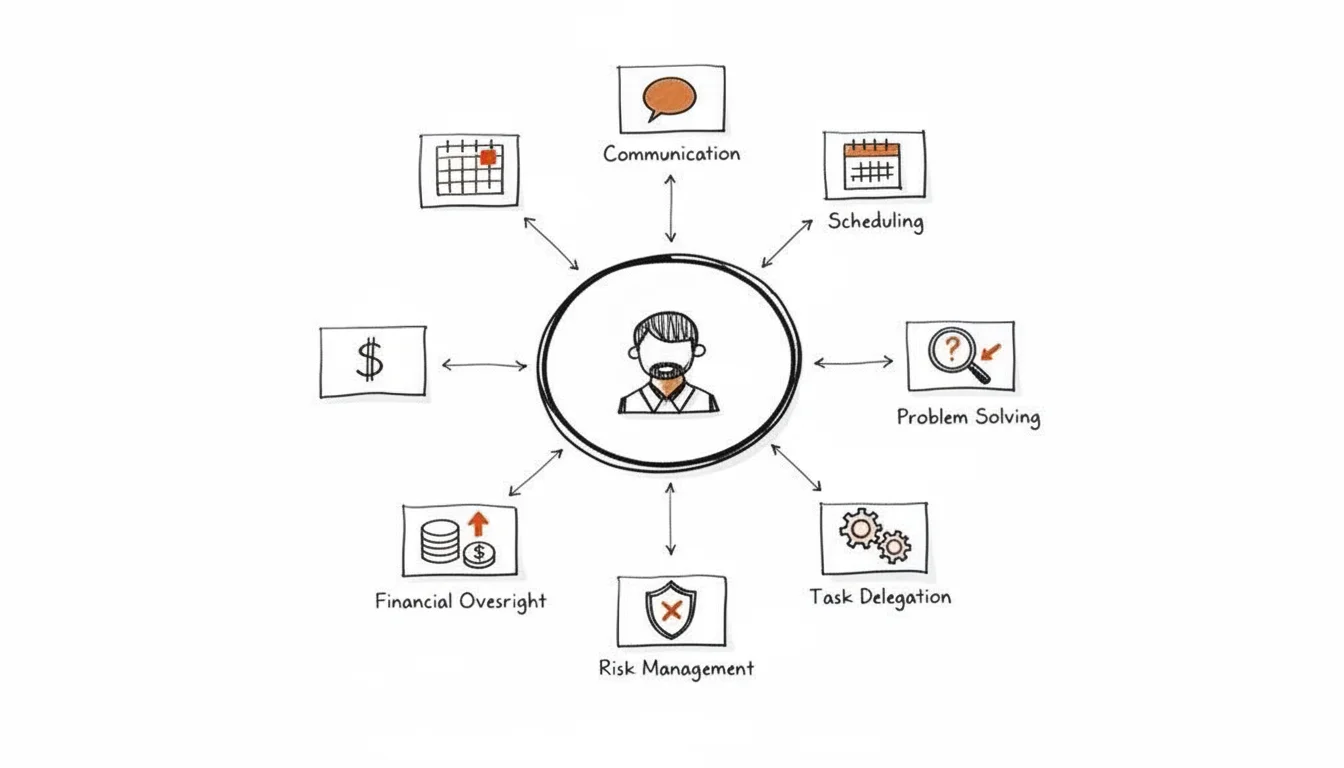
7 Core IT Project Managers Responsibilities Explained (2025)
Seven Pillars of Successful IT Project Management
In today's dynamic IT landscape, the role of a project manager transcends simple task management. Effective IT project managers are strategic leaders, financial stewards, and technical guides, orchestrating complex projects to deliver tangible business value. This requires a deep understanding of people, processes, and technology. This guide explores the seven essential pillars defining a successful IT project manager.
1. Mastering Project Planning and Scope Management
A successful IT project begins with meticulous planning. This involves defining the project's scope, objectives, and deliverables with precision. This translates high-level business visions into detailed, actionable blueprints. This foundational stage necessitates decomposing complex initiatives into a Work Breakdown Structure (WBS), meticulously gathering requirements from all stakeholders, and establishing clear boundaries – defining what will and will not be delivered. Effective scope management is crucial in preventing scope creep.
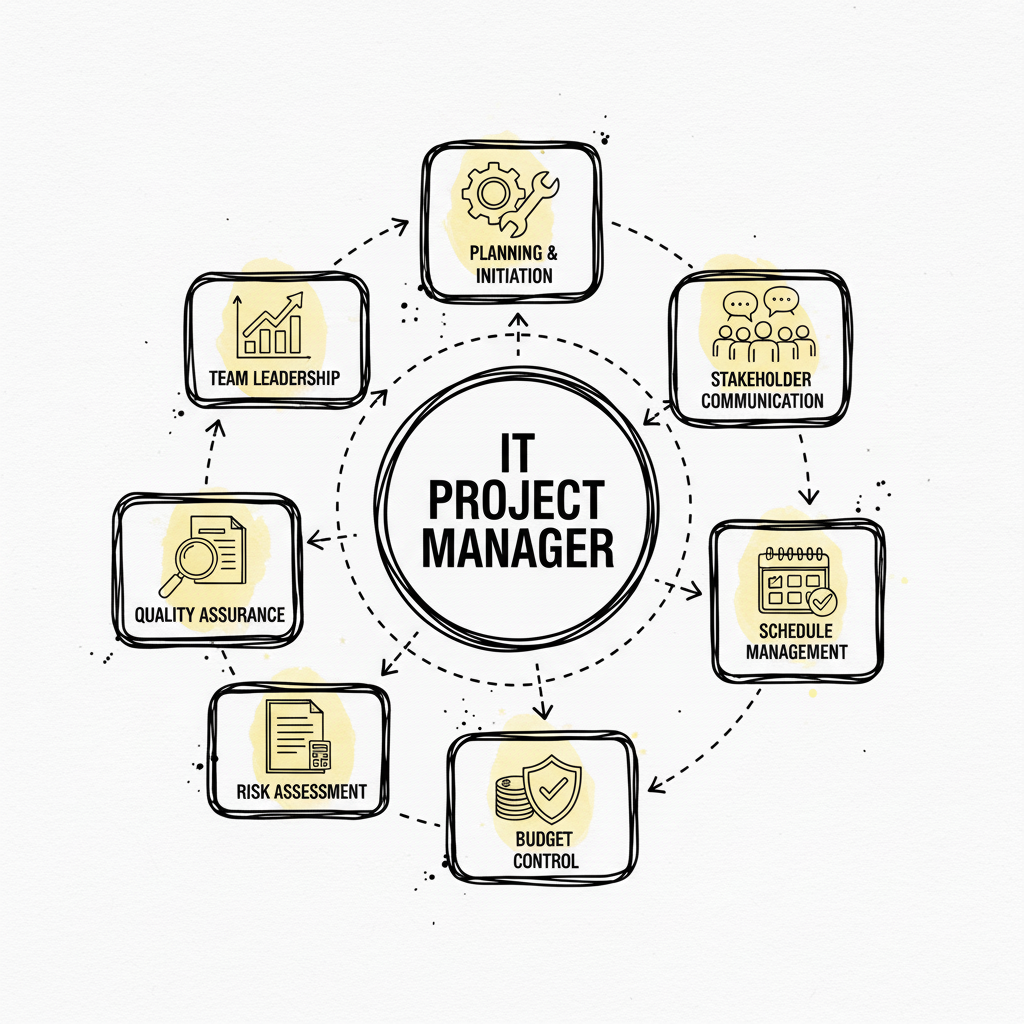
Real-World Example: Enterprise Cloud Migration Consider an enterprise migrating on-premise systems to AWS. The project manager must define the scope (applications, databases for Phase 1, performance benchmarks) and create a detailed WBS (network configuration, server provisioning, data migration, security). Without this, the project could easily become unwieldy and exceed budget.
Actionable Tips for Implementation:
- Utilize collaborative tools (Jira, Asana, Microsoft Project) for centralized task and timeline management.
- Define clear acceptance criteria for each deliverable to remove ambiguity.
- Conduct regular scope review meetings to proactively manage potential scope creep.
For a deeper understanding of planning within project management domains and its impact on project outcomes, explore resources on project management domains.
2. Resource Management and Team Leadership
Effective IT project management hinges on skilled team leadership. This involves assembling the right team, distributing workloads effectively, and fostering a collaborative environment. This requires understanding team dynamics, conflict resolution, and servant leadership principles.
Real-World Example: Spotify's Squad Model Spotify's agile squad model exemplifies effective resource management. Project managers act as facilitators, ensuring each squad has the necessary skills, removing impediments, and supporting team morale. This empowers teams, leading to faster development and greater product ownership.
Actionable Tips for Implementation:
- Implement a skills matrix to map team member skills and identify training needs.
- Utilize resource management tools (Float, ResourceGuru) to visualize team capacity and prevent burnout.
- Establish clear communication channels (Slack, Jira, scheduled meetings) to optimize communication flow.
To learn more about the importance of leadership and soft skills in project management, explore resources on leadership and soft skills.
3. Budget Management and Financial Oversight
IT project managers are financial stewards, responsible for the entire financial lifecycle: cost estimation, budget allocation, procurement oversight, and reporting. This ensures efficient spending within approved financial constraints.
Real-World Example: Walmart's E-commerce Platform Development Walmart's e-commerce platform development demonstrates the scale of financial management in large IT projects. Project managers oversaw a multi-billion-dollar budget, allocating funds for technology, teams, and system integration. Rigorous financial oversight was crucial for cost control and achieving strategic goals.
Actionable Tips for Implementation:
- Use Earned Value Management (EVM) for holistic project performance analysis.
- Maintain contingency reserves (10-20% of the budget) to cover unforeseen costs.
- Implement regular budget review cycles for proactive cost monitoring.
- Leverage financial management tools (Oracle Primavera, SAP PPM) for automation and reporting.
4. Risk Management and Issue Resolution
Proactive risk management is crucial. IT project managers must identify, assess, and mitigate risks before they become critical issues. This involves creating a framework for anticipating threats, evaluating their impact, and developing mitigation strategies. When issues arise, decisive resolution is key.
Real-World Example: Cybersecurity Incident Response A data breach necessitates a high-stakes project focusing on incident response and recovery. The project manager manages risks (security vulnerabilities, regulatory fines, loss of trust), coordinates teams, deploys patches, and communicates with stakeholders.
Actionable Tips for Implementation:
- Conduct regular risk workshops to brainstorm potential threats.
- Implement RAID logs (Risks, Assumptions, Issues, Dependencies) for centralized tracking.
- Establish clear escalation paths for critical issues.
Learn more about risk analysis and response strategies through resources on risk management.
5. Stakeholder Communication and Management
IT project managers act as the central communication hub, bridging the gap between technical teams, business stakeholders, executives, and vendors. This requires a strategic approach to managing expectations, facilitating dialogue, and ensuring alignment.
Real-World Example: Disney's MagicBand Implementation Disney's MagicBand rollout involved coordinating diverse stakeholders (Imagineering, Parks Operations, IT, finance, vendors). Effective communication – translating technical details for non-technical stakeholders and vice versa – was crucial for success.
Actionable Tips for Implementation:
- Create a stakeholder map to prioritize communication efforts.
- Tailor communication to each audience's needs and understanding.
- Establish regular feedback loops to ensure stakeholder engagement.
6. Quality Assurance and Testing Oversight
Ensuring quality throughout the project lifecycle is paramount. This involves establishing a QA framework, overseeing testing strategies, and validating that deliverables meet requirements and stakeholder expectations.
Real-World Example: E-Commerce Platform Load Testing For major sales events, e-commerce platforms require rigorous load testing. The project manager oversees the testing strategy, identifies bottlenecks, and ensures system resilience under peak traffic.
Actionable Tips for Implementation:
- Implement a “shift-left” testing approach, starting early in the development cycle.
- Leverage automated testing tools (Selenium, Cypress, Jest) to increase efficiency.
- Establish a clear “Definition of Done” for all deliverables.
Explore more on software testing and quality assurance.
7. Technology Architecture and Solution Design
While not needing to be senior developers, IT project managers must understand technology architecture and solution design to ensure alignment with business objectives, scalability, and long-term strategy.
Real-World Example: Spotify's Evolving Recommendation Engine The project manager overseeing Spotify's recommendation engine wouldn't write algorithms, but they would influence architectural decisions (data processing frameworks, real-time performance), connecting technical choices to business goals (improved user engagement).
Actionable Tips for Implementation:
- Collaborate with technical leads and architects.
- Leverage Proof-of-Concept (PoC) for evaluating new technologies.
- Participate in architecture reviews to ensure alignment with project goals.
7 Key Responsibilities Comparison
| Aspect | Project Planning & Scope Management | Resource Management & Team Leadership | Budget Management & Financial Oversight | Risk Management & Issue Resolution | Stakeholder Communication & Management | Quality Assurance & Testing Oversight | Technology Architecture & Solution Design |
|---|---|---|---|---|---|---|---|
| Implementation Complexity 🔄 | Medium | High | Medium | Medium to High | Medium | Medium | High |
| Resource Requirements ⚡ | Moderate | High | Moderate | Moderate | Moderate | Moderate to High | Moderate |
| Expected Outcomes 📊 | Clear scope, timeline adherence | Increased productivity, morale | Budget adherence, ROI optimization | Reduced failures, stakeholder confidence | Strong alignment, informed decisions | Fewer defects, user satisfaction | Scalable, maintainable solutions |
| Ideal Use Cases 💡 | Large complex projects | Cross-functional or distributed teams | Projects with strict financial constraints | High-risk projects | Projects with multiple stakeholders | Projects requiring high quality | Projects requiring technical oversight |
| Key Advantages ⭐ | Prevents scope creep | Maximizes productivity | Ensures financial control | Proactive risk management | Builds trust, reduces conflicts | Enhances reliability | Prevents technical debt |
| Tips 💡 | Use Jira/Asana, stakeholder reviews | Regular 1:1s, resource tools, skills matrix | Use EVM, contingency reserves, reviews | Risk workshops, RAID logs, escalation | Tailor communication, feedback loops | Shift-left testing, automation | Collaborate with architects, use PoCs |
Elevating Your Career by Mastering These Responsibilities
Mastering these seven pillars is key to becoming a successful IT project manager. It involves transitioning from managing tasks to orchestrating outcomes, shifting from a reactive to a proactive mindset. Success in one area supports success in others. Continuous improvement across all seven areas is vital for career advancement within the field.
This proactive approach, coupled with a commitment to continuous learning and improvement, forms the foundation for a robust and rewarding career in IT project management. Each successful project strengthens your reputation as a capable and reliable leader.
Ready to enhance your project management skills? MindMesh Academy offers comprehensive training programs designed to equip you with the knowledge and skills to excel in this field. Visit MindMesh Academy to explore our offerings.

Written by
Alvin Varughese
Founder, MindMesh Academy
Alvin Varughese is the founder of MindMesh Academy and holds 15 professional certifications including AWS Solutions Architect Professional, Azure DevOps Engineer Expert, and ITIL 4. He's held senior engineering and architecture roles at Humana (Fortune 50) and GE Appliances. He built MindMesh Academy to share the study methods and first-principles approach that helped him pass each exam.