
How to Reduce Employee Turnover: how to reduce employee turnover strategies
How to Reduce Employee Turnover: Strategies for Building a Resilient Workforce
In the fast-paced world of IT, talent is currency. For professionals building careers around certifications like AWS, PMP, ITIL, or Azure, the demand for their specialized skills is higher than ever. This competitive landscape means that retaining top talent isn't just a challenge; it's a strategic imperative. To truly master employee retention and reduce turnover, your organization needs a strategy built on strong leadership, fair compensation, a supportive culture, and real growth opportunities. This isn't about patching leaks; it’s about proactively cultivating an environment where IT professionals — and all employees — genuinely want to stay, thrive, and advance their careers. At MindMesh Academy, we believe in empowering both individuals and organizations with the knowledge to build such sustainable success.
Understanding the Real Cost of Employee Turnover in IT
High employee turnover is a silent yet destructive force in any business, particularly within technology sectors. It's more than an inconvenient HR metric; it’s a constant drain on your company's resources, morale, and momentum. When a skilled IT professional hands in their notice, the immediate, tangible costs are clear: recruitment agency fees, job board advertisements, and countless hours managers spend sifting through resumes and conducting interviews.
But these are merely the surface-level expenses. The true damage permeates beneath, impacting critical IT operations and project delivery.
Consider the ripple effect on productivity. Remaining team members, often already stretched thin by demanding projects and on-call rotations, must absorb the departing individual's workload. This often leads to increased stress and burnout, jeopardizing project timelines and service level agreements (SLAs). Then there's the significant investment of time and capital in training a new hire. For specialized IT roles, achieving full productivity can easily take six months or more, delaying critical initiatives like cloud migrations, security implementations, or large-scale software development.
Even more critically, every departing employee takes a piece of your company's unique operational knowledge. This institutional memory — undocumented workarounds, the history behind legacy systems, specific client project nuances (crucial for PMP-certified project managers), or the subtle team dynamics that enable seamless DevOps workflows — walks out the door. This slow erosion of collective experience weakens the entire organization, potentially leading to technical debt, security vulnerabilities, or operational inefficiencies that would make any ITIL practitioner cringe.
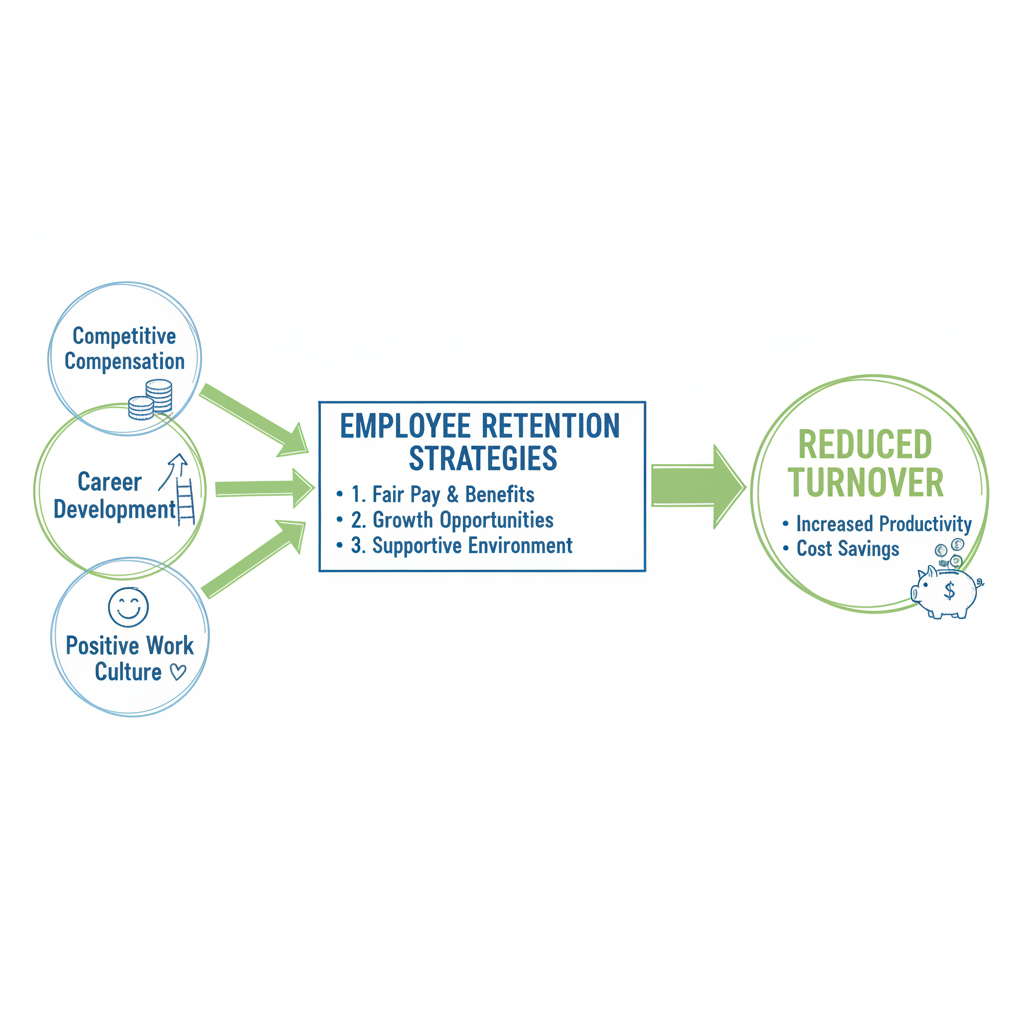
The Ripple Effect of Losing an Employee in a Technical Context
The financial impact is substantial, but the cultural damage can be devastating. A constant revolving door creates instability. Employees who stay begin to feel uneasy, wondering if they too should be updating their resumes or pursuing that next AWS certification. Engagement drops, morale plummets, and the pervasive question becomes, "Who's leaving next?" This can be particularly disruptive in agile teams or during critical project phases.
"Turnover isn't just a cost center; it's a culture killer. Every time a valued employee walks out the door, it sends a message to those who stay. Addressing the root causes of turnover is the single most important investment you can make in building a resilient, high-performing team."
Before you can effectively address turnover, you must fully grasp its true, multifaceted cost. This understanding forms the bedrock for building a meaningful retention strategy. This guide will provide actionable steps, organized around four foundational pillars. For example, offering robust training is an excellent starting point, but it's equally vital to understand how to measure training effectiveness to ensure your investment truly makes a difference.
To create a workplace that IT professionals don't want to leave, you need to focus your efforts on these core areas. Think of them as the critical pillars supporting your entire retention strategy.
Four Pillars of a High-Retention Strategy
| Strategy Pillar | Primary Goal | Key Actions to Take |
|---|---|---|
| Strong Leadership | Build trust and provide clear direction. | Invest in manager training, establish clear feedback channels, and lead with empathy. |
| Fair Compensation & Growth | Ensure employees feel valued and see a future. | Conduct regular salary benchmarking, create transparent career paths, and fund development. |
| Supportive Culture | Create an environment of well-being and engagement. | Implement recognition programs, genuinely prioritize work-life balance, and foster open communication. |
| Meaningful Flexibility | Empower employees with autonomy and trust. | Offer flexible work arrangements and provide the tools needed for success in any environment. |
Mastering these four areas is the key to transforming your organization from a place where people merely work to a place where they are excited to join and grow their IT careers.
Why Great Managers Are Your Best Retention Tool in Tech
The adage holds particularly true in technical fields: "People don't leave companies, they leave managers." While competitive pay and impressive perks certainly matter, the daily working relationship an IT professional has with their direct supervisor is often the single most significant factor in their decision to stay or seek new opportunities.
A great manager acts as a buffer against workplace stress, a champion for career growth (helping team members pursue their PMP or AWS Certified Solutions Architect certification), and a steady hand guiding complex projects. A poor manager, however, can make even the most exciting tech role feel like a dead end. They can foster confusion, breed distrust, and erode the psychological safety essential for high-performing engineering or operations teams.
This is precisely why investing in your leaders, especially those overseeing technical teams, is one of the most direct routes to solving a turnover problem. It’s not about the free snacks in the breakroom; it’s about building genuine trust and competence where it truly counts. The data consistently affirms that trust in leadership is a massive driver of employee retention.
In fact, a staggering 50% of employees who quit point to their boss as the main reason. This highlights the immense influence managers wield. You can explore this connection further in Gallagher's analysis of HR's biggest challenges.
Turning IT Managers Into Retention Magnets
So, how do you cultivate managers who inspire IT professionals to stay? It begins with redefining the managerial role. It's not solely about delegating tasks or checking off project milestones. It’s about coaching, developing, and genuinely supporting their technical team members.
This demands a specific skill set that few are born with. Exceptional IT managers excel in key areas:
- Communication: They set crystal-clear expectations for projects and deliverables, provide regular and constructive feedback on performance and code reviews, and maintain transparency regarding team and company goals.
- Empathy: They understand their team members as individuals, recognizing the unique motivations and challenges of developers, system administrators, or cybersecurity analysts. They listen actively to concerns, whether it's about a challenging project or potential burnout from on-call duties.
- Advocacy: They champion their team. They celebrate successful project launches, fight for necessary resources (e.g., cloud credits, new software licenses), and proactively remove roadblocks so their team can perform at their best.
- Development: They are constantly on the lookout for opportunities to help their employees grow, learn new technologies (like a specific AWS service), or advance their careers through certifications or new responsibilities.
These are not "soft skills" in the IT context; they are crucial leadership competencies that directly impact your ability to retain top technical talent.
Practical Steps to Develop Better Leaders for IT Teams
Promoting your best individual contributor—say, a brilliant Senior Developer or a highly skilled Network Engineer—into a management role without adequate training is a common pitfall. This approach not only sets the new manager up for failure but also risks demoralizing the entire technical team they inherit. If you are serious about reducing employee turnover in IT, investing in specialized leadership development for your technical managers is non-negotiable.
A manager who builds trust and provides clear, empathetic guidance is more valuable than any retention bonus. They create a micro-culture where technical professionals feel supported and valued—something a paycheck alone can never truly buy.
Here are actionable ways to build a stronger bench of IT leaders:
Implement 360-Degree Feedback
For IT managers, one of the most powerful tools for self-awareness is 360-degree feedback. This process gathers anonymous input from an employee's direct reports, peers (like fellow project managers or tech leads), and their own supervisor, offering a comprehensive view of their leadership performance.
It effectively uncovers blind spots. For instance, an IT manager might believe they're a great communicator, but feedback from their development team could reveal that their sprint goals are often vague, or they seem unapproachable when critical system issues arise (a challenge ITIL often addresses). This candid insight is invaluable—it's often the catalyst for real, impactful change.
Run Workshops on Empathy and Communication in Tech
Don't assume your IT managers intuitively know how to lead with empathy, especially when dealing with highly analytical or introverted technical teams. Conduct workshops focused on practical skills: active listening during one-on-ones, delivering tough feedback on code quality without crushing morale, and recognizing early signs of burnout from tight deadlines or complex debugging sessions. Use real-world IT scenarios to make the training resonate.
For example, you could role-play this common IT situation: A top developer's output has suddenly declined. Instead of immediately addressing performance, an empathetic IT leader checks in with them as a person first. The workshop could practice this conversation, teaching managers how to open the door with questions like, "I've noticed things seem a bit different lately with your contributions. Is everything okay, or is there anything I can do to support you?"
Train Managers to Be Coaches, Not Bosses
You need to shift the entire management mindset in IT from "boss" to "coach." A coach doesn't have all the technical answers; their job is to help their team members find those answers themselves. This means empowering developers to troubleshoot, guiding system architects to design robust solutions, and encouraging cybersecurity analysts to develop their own threat detection strategies.
This approach involves asking powerful questions, helping employees define their own development goals (perhaps aiming for a specific AWS or Azure certification), and providing support and mentorship instead of simply issuing commands. When IT professionals feel their manager is genuinely invested in their growth, their loyalty and engagement skyrocket.
Designing Pay and Career Paths That Inspire Loyalty
While an exceptional manager is your first line of defense against turnover, an unclear or unfair compensation structure is a guaranteed way to lose your best IT talent. It's not solely about the absolute number on their paycheck. Employees need to feel their contributions are equitably valued, and crucially, they must envision a clear future for themselves at your company. If a cloud architect or a senior developer can't see their next step, they will inevitably seek it elsewhere.
This goes beyond merely "paying well." It’s about constructing a transparent system where compensation is fair, and career growth isn’t an opaque mystery. When IT professionals understand how their salary is determined and what it takes to advance to the next level—becoming a principal engineer, a lead project manager, or an ITIL service owner—you build a foundation of trust that encourages them to stay.
Without such clarity, you risk losing valuable technical talent not necessarily because they are underpaid, but because they feel underpaid or perceive no upward trajectory. This feeling often stems from a lack of information, which creates a vacuum quickly filled with doubt and resentment.
How to Build a Competitive Pay Structure for IT Roles
First and foremost, you must ensure your pay structure is competitive within the IT industry and your specific geographic market. Guesswork here is a recipe for disaster. You need to anchor your salary bands in objective, real-world data through salary benchmarking.
This involves thoroughly researching what other companies, particularly those in the tech sector, are paying for comparable roles (e.g., DevOps Engineer, Data Scientist, Cybersecurity Analyst). You can leverage data from specialized IT salary survey providers, industry reports (like those from CompTIA or Dice), or even public job postings for certain positions. The objective is to establish a clear salary range—a minimum, midpoint, and maximum—for every technical role in your organization.
Here’s a practical approach to get started:
- Gather the Data: Collect comprehensive salary information for IT roles that align with yours in your local or remote talent market. Focus on companies of similar size and within the tech industry.
- Define Your Philosophy: Decide where you want your organization to sit within the market. Are you aiming to pay at the 50th percentile (the average) to remain competitive, or are you prepared to pay at the 75th percentile to attract and retain the absolute best, highly certified talent?
- Create Your Salary Bands: For each technical role, establish formal pay ranges. This provides a consistent, fair, and transparent framework for every compensation decision, from new hires to promotions.
This data-driven approach removes subjectivity from pay discussions. It empowers managers to have confident, transparent conversations, shifting the dynamic from a tense negotiation to a clear dialogue based on established company policy.
"A well-defined career path is a roadmap, not just a ladder. It shows employees the different routes they can take to grow, whether that’s climbing up as a technical lead, moving sideways to gain new skills in a different cloud platform, or deepening their expertise as a distinguished individual contributor."
The chart below illustrates the top reasons employees leave their jobs, putting the role of compensation into perspective.

As you can see, poor management is the primary driver for attrition, but compensation remains a significant factor. These elements are interconnected and mutually reinforcing.
Charting a Clear Course for IT Career Growth
Competitive pay attracts IT professionals, but a visible path for career growth is what convinces them to commit long-term. High-achievers, especially those investing in certifications like PMP, AWS, or Azure, need to see that their hard work and skill development are leading somewhere tangible. This is where career ladders and internal mobility programs become absolutely essential for technical roles.
A career ladder is essentially a visual map outlining the steps for advancement within a specific IT role or department. It clearly defines the skills, experience, and competencies required to progress from one level to the next. For instance, it might show a Junior DevOps Engineer the precise path to becoming a Senior DevOps Engineer, and eventually a Principal Cloud Architect. This structure is invaluable for IT professionals planning their next certification.
However, growth isn't always a linear climb. A smart strategy also incorporates pathways for internal mobility—making it easy for employees to move into different departments or roles to learn new things. This prevents talented IT staff from feeling bored or stagnant, and it demonstrates your investment in their long-term development. If you're looking for fresh ideas, our guide on how to upskill employees offers practical tips for enhancing technical capabilities.
These development programs are especially critical in industries known for high turnover, but they must be tailored. Retention strategies effective for a tech company might not directly translate to retail or hospitality.
High-Impact Retention Tactics by Industry
| Industry | Common Turnover Driver | Proven Retention Strategy |
|---|---|---|
| Hospitality | Burnout, low pay, lack of growth. | Cross-Training & Tipping Pools: Train staff in multiple roles to reduce monotony and share tips across teams to foster collaboration and boost earnings. |
| Retail | Inconsistent hours, limited advancement. | Predictive Scheduling & Manager Training: Use software for stable schedules and invest heavily in training store managers to create positive, supportive environments. |
| Tech | Poaching by competitors, skill stagnation. | Defined Technical Ladders & L&D Budgets: Offer clear paths for individual contributors (not just managers, e.g., Staff Engineer, Principal Architect) and provide generous budgets for courses and certifications (AWS, Azure, PMP, ITIL, CompTIA). |
| Healthcare | High stress, emotional exhaustion. | Mental Health Support & Flexible Shifts: Provide free access to counseling services and offer flexible scheduling options to help clinicians manage work-life balance. |
These examples highlight how tailored approaches, grounded in understanding the specific drivers of attrition within a given field, can yield significant improvements.
In sectors like retail, where voluntary turnover is 26.7%, and hospitality, which faces a shocking 75.2% total turnover rate, these initiatives are non-negotiable. Many companies find that up to 61% of employees leave within the first year, often because the reality of the job didn't match their expectations for pay or growth.
For these programs to be truly effective, they must be more than just static documents. Managers, especially those leading technical teams, need to actively use career paths as a coaching tool in their one-on-ones, helping team members construct personalized development plans that align with their goals and desired certifications. This proactive guidance demonstrates a genuine commitment to their future—making them far less likely to seek that future elsewhere.
Reflection Prompt for IT Professionals: Think about your current role. Do you have a clear career path outlined? Are there specific certifications or skills that would unlock your next professional step? How could your organization better support that growth?
Building a Culture Where IT Professionals Want to Stay
While skilled managers and fair compensation are foundational, it's the daily work environment—your company culture—that truly provides the adhesive for retention. A toxic or disengaged culture is a stealthy killer, subtly pushing your most talented IT professionals to update their resumes and explore new LinkedIn opportunities. If you aim to stop the revolving door, you must cultivate a workplace where people genuinely want to contribute their skills.
This isn’t about superficial office perks or unlimited snacks. It's about forging a psychologically safe space where IT staff feel heard, valued, and connected to a larger mission—whether that's deploying critical cloud infrastructure or safeguarding sensitive data. When you make employee engagement an active, daily priority, people don't just show up for a paycheck; they show up because they're deeply invested in the team's success and the company's vision.

Implement Meaningful Feedback Loops for Technical Teams
To make IT professionals feel truly heard, you must genuinely listen. Annual surveys, while useful, are often too slow. By the time results are analyzed, critical issues, such as overwhelming technical debt or inadequate support for a new Azure service, may have festered for months. You need consistent, lightweight channels to capture the real-time pulse of your technical workforce.
Pulse surveys are an excellent tool here. These are short, frequent check-ins—perhaps monthly or quarterly—asking a handful of targeted questions about manager support, workload, team cohesion, or satisfaction with technical tools. This allows you to track trends and spot potential problems before they escalate into significant issues.
Another powerful, proactive measure is the stay interview. Unlike an exit interview, these are one-on-one conversations conducted with your current employees. The goal is to uncover what keeps them engaged and what might tempt them to explore other opportunities. It's your chance to address small friction points before they become major reasons for departure. In an IT context, this might involve discussing career growth, challenging projects, or the availability of resources for certification studies.
Make Onboarding an Unforgettable Experience for IT Hires
First impressions are lasting, especially for new technical hires. A clunky, disorganized onboarding process can lead a new AWS Solutions Architect or a PMP-certified Project Manager to regret their decision before they've even completed their first week. A truly great onboarding program extends far beyond HR paperwork; it fully immerses new team members in your culture and equips them for success from day one.
Your objective is to make them feel like a valued part of the team immediately. This demonstrates that you were expecting them and are genuinely excited to have their expertise.
- Have a Structured Plan: Map out their first week with a blend of essential system access (e.g., VPN, cloud console, project management tools like Jira/Azure DevOps), introductions to key team members, and a few small, achievable tasks to help them secure an early win and build confidence.
- Assign a Welcome Buddy: Pair them with a peer mentor (not their direct manager) who can answer informal questions about team dynamics, company culture, or common IT quirks. This provides a safe, approachable resource for "silly" questions.
- Schedule Manager Check-ins: The direct manager should connect with them daily during the first week, then transition to weekly for the first month, ensuring they feel supported and integrated.
This thoughtful planning confirms they made the right choice and drastically reduces early-stage turnover among your technical hires.
The new challenge for many organizations is not just retaining people, but re-engaging them. This 'Great Detachment' happens when employees stay but mentally check out, becoming a hidden drain on productivity and morale.
Recent data paints a concerning picture. With US employee engagement hitting an 11-year low and the voluntary turnover benchmark at 13.2%, many HR leaders now see this detachment as their top concern. In fact, a staggering 76% of organizations report challenges filling critical roles, underscoring just how urgent this is.
Recognize Contributions Authentically
Recognition programs can fall flat if they feel forced or generic, especially in technical environments where contributions are often highly specific. "Employee of the Month" can quickly become a meaningless routine. The most powerful recognition is always timely, specific, and authentic, celebrating the exact behaviors and achievements you want to see more of.
To make recognition stick, create multiple channels for appreciation to happen organically within your IT teams.
- Peer-to-Peer Recognition: A simple Slack or Microsoft Teams channel where anyone can publicly praise a colleague who helped them debug a complex issue or successfully migrated a critical service is incredibly effective. It fosters camaraderie and reinforces collaborative teamwork.
- Managerial Spotlighting: Encourage IT managers to begin team meetings by highlighting specific technical contributions, linking individual efforts directly to sprint goals or successful project deployments.
- Value-Based Awards: Move beyond generic plaques. Create awards tied to your company's core values, such as an "Innovation Driver" for a developer who streamlined a process, or a "Customer Champion" for an IT support specialist who went above and beyond (reflecting ITIL principles). To maximize the impact of these initiatives, integrate them into your broader development strategy. Our article on employee training best practices can offer valuable ideas here.
Invest Genuinely in Employee Wellness for IT Professionals
Finally, a culture that retains its people demonstrates care for them as whole individuals, not just as components of a machine. This means making employee well-being a tangible, visible priority that extends far beyond a comprehensive health insurance plan.
It involves actively promoting a healthy work-life balance, encouraging IT professionals to fully utilize their vacation time (especially after demanding project cycles or lengthy on-call periods), and providing genuine resources to manage stress associated with high-pressure technical roles. When someone is struggling, a supportive culture offers a safety net. For a deeper dive, check out this excellent guide to overcoming workplace burnout. By fostering this kind of supportive atmosphere, you build a more resilient IT workforce that is far less likely to burn out and much more likely to stay and contribute their valuable skills.
Offering Flexible Work That Truly Works for Technical Roles
Let's be unequivocally clear: flexibility is no longer a trendy perk; it's a fundamental expectation, particularly within the IT sector. For a significant portion of today's technical workforce—developers, cloud architects, cybersecurity analysts—the autonomy to control where and when they work is a deal-breaker. If your organization is still attempting to force everyone into a rigid 9-to-5, in-office schedule, you are effectively ceding your best talent to competitors who empower them with greater autonomy.
When you offer genuine flexibility, you transmit a powerful message of trust. You communicate to your technical team that you prioritize their results and well-being over their physical presence at a desk. This paradigm shift—from monitoring "time in seat" to focusing on delivered outcomes—is a game-changer for employee satisfaction and loyalty, crucial for modern IT teams.
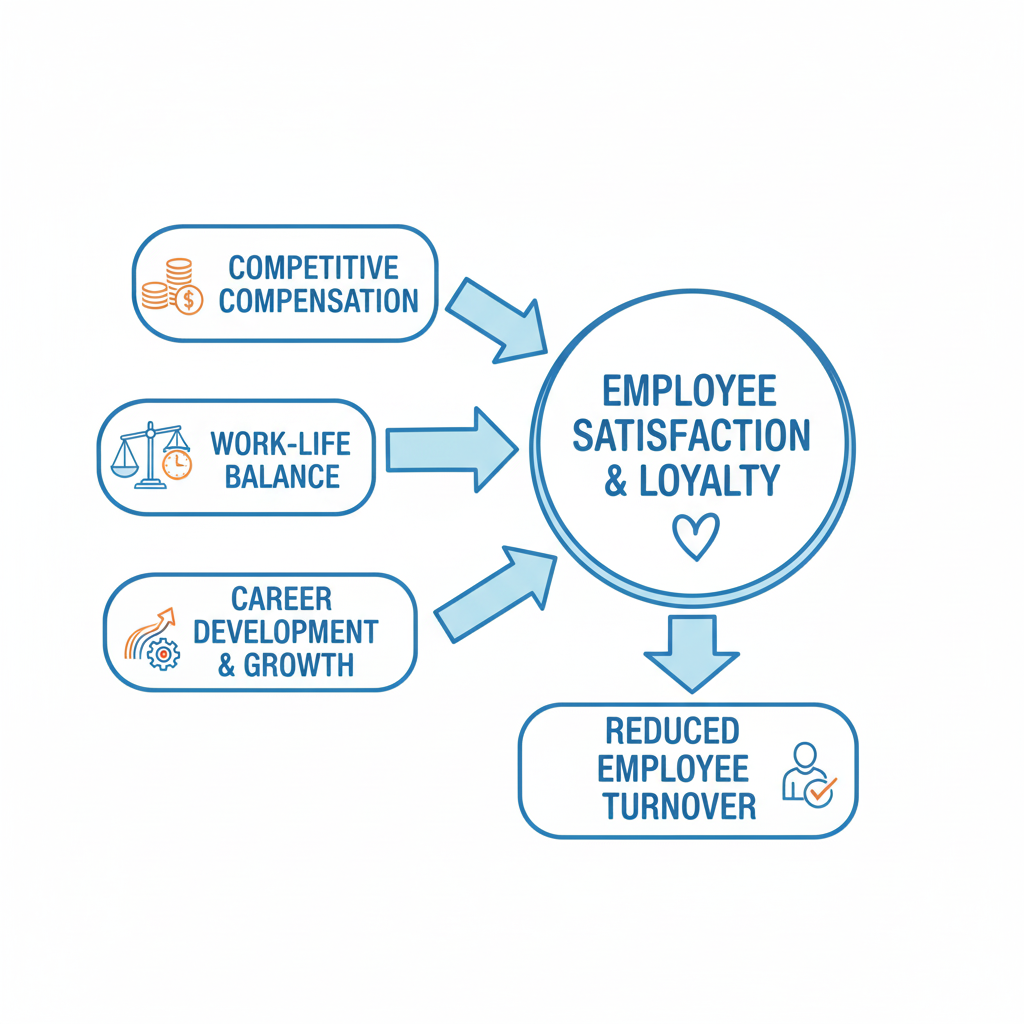
Finding the Right Flexible Model for Your IT Team
"Flexibility" isn't a one-size-fits-all solution. Simply announcing a vague "hybrid policy" without clear structure is a recipe for confusion and frustration, particularly when coordinating complex IT projects. The objective is to identify a model that effectively supports your business goals and the needs of your technical talent.
Here are a few common approaches that have proven successful:
- Hybrid (Office-Centric): This is often the "anchor days" model. Perhaps all team members are expected in the office Tuesday through Thursday for collaborative work sessions, then work remotely Monday and Friday. It strikes a good balance for IT teams that thrive on in-person brainstorming for new feature development or architectural design.
- Hybrid (Remote-First): In this model, remote work is the default. The physical office serves as a resource—a hub for individuals seeking deep focus, optional team meetups, or a change of scenery. This approach dramatically expands your talent pool, allowing you to recruit top IT talent from any location.
- Fully Remote: No central office, period. This model demands an exceptionally intentional communication culture and robust digital collaboration tools, but it offers ultimate freedom and can attract a global pool of specialized technical talent.
- Compressed Workweek: Consider four 10-hour days (a 4/10 schedule). Employees complete the same amount of work but gain a three-day weekend every week. This is a significant boon for work-life balance, especially for IT professionals managing demanding workloads.
Do not guess what will work best. Engage with your employees. Conduct surveys to understand their preferences and critically evaluate which IT roles genuinely necessitate a specific on-site presence (e.g., managing physical server racks vs. cloud infrastructure).
Setting the Guardrails for Success in Distributed IT Teams
Trusting your team with flexibility doesn't equate to an absence of rules. To ensure flexibility enhances, rather than detracts from, productivity and culture within your IT teams, you need clear guardrails and robust support systems.
First, establish clear communication protocols. For instance, define core collaboration hours—say, 10 a.m. to 3 p.m. in your primary time zone—during which all team members are expected to be online and readily available for synchronous discussions. This keeps projects moving without tethering individuals to their desks all day.
Next, optimize your tech stack. This extends beyond merely providing a laptop and a Zoom account. You require robust project management tools like Asana or Trello for tracking tasks, instant messaging platforms such as Slack for quick communication, and digital whiteboards (like Miro) that simulate in-person collaboration for design sessions or architectural diagrams.
A successful flexible work policy for IT isn't about where work gets done; it's about how it gets done. It necessitates a deliberate investment in communication strategies, enabling technology, and fostering a culture of trust and accountability.
Finally, you must train your IT managers to effectively lead distributed teams. This is a distinct skill set. They need to learn how to manage by outcomes rather than by constant observation, how to cultivate genuine connections with a geographically dispersed team, and how to ensure remote team members have equal opportunities for growth and visibility as their in-office counterparts.
Maintaining a Strong Culture from a Distance for IT Teams
One of the most prevalent concerns among leaders regarding flexible work is the potential for company culture to dissipate. This is a valid apprehension, but it is entirely avoidable with intentional effort. You can no longer rely solely on spontaneous water cooler chats to build team bonds within your IT department. You must proactively engineer those moments.
Here are strategies that prove effective for remote and hybrid IT teams:
- Schedule Virtual Social Time: Integrate regular, non-work-related events into the calendar. Virtual coffee breaks, online trivia, or even group gaming sessions (common in tech) might feel slightly forced initially, but they are crucial for nurturing the personal relationships that make work enjoyable and build camaraderie.
- Make In-Person Time Count (If Hybrid/Remote-First): For hybrid or remote-first models, plan purposeful in-person gatherings a few times a year. Do not squander this valuable time on meetings that could have been an email. Utilize it for high-level strategy sessions, creative workshops (e.g., hackathons), and social events that genuinely strengthen team bonds and celebrate collective achievements.
- Create Digital "High-Five" Channels: Designate a Slack or Teams channel specifically for peer-to-peer shout-outs and recognition. This ensures that excellent work—like a difficult bug fix, a successful deployment, or exceptional support during an incident—is seen and celebrated by everyone, not just those physically present.
When you thoughtfully embrace flexibility, you create an environment that IT professionals find difficult to leave. You demonstrate that you can grant your team autonomy while simultaneously fostering a thriving, connected culture.
Got Questions About Employee Retention? We've Got Answers
Even when you're meticulously implementing retention strategies, complex questions inevitably arise. I understand these challenges. Here are direct, practical answers to common questions from leaders striving to retain their top IT talent.
How Do I Actually Measure Employee Turnover in IT?
Before you can effectively address turnover, you must precisely identify its scope. Calculating your turnover rate is that crucial initial step.
The basic formula provides a starting point: (Number of Employees Who Left ÷ Average Number of Employees) x 100 = Turnover Rate
However, that aggregate number offers limited insight. The true narrative lies within the details. You need to delve deeper:
- Voluntary vs. Involuntary: Are IT professionals quitting by choice, or are they being let go? A high voluntary turnover rate among IT staff is a significant red flag, often directly pointing to issues with management, compensation, career progression, or company culture.
- Department by Department: Is your DevOps team exceptionally stable while your cybersecurity department experiences a constant revolving door? Analyzing turnover by specific IT functions helps you pinpoint particular managers, team dynamics, or unique stressors that require immediate attention.
- The First-Year Itch: If a substantial number of your new technical hires are departing within their first 12 months, something is likely amiss in your recruiting, onboarding, or expectation-setting processes. You might be misrepresenting the role or failing to adequately support them during their crucial initial period.
Viewing the numbers through this granular lens transforms a generic metric into a powerful diagnostic tool for your IT organization.
What Should We Do with Exit Interview Feedback from IT Professionals?
So you've diligently collected a wealth of feedback from exit interviews with departing IT staff. Excellent. Now what? Far too many companies allow this invaluable trove of information to gather dust in a digital archive.
Do not let that be your organization. You need a streamlined system to actively utilize what you learn.
Begin by tagging the feedback by theme. You will quickly discern recurring patterns—issues like management style (e.g., lack of clear technical direction), feeling underpaid (compared to market rates for AWS/Azure skills), absence of clear growth paths, or unsustainable work-life balance (e.g., excessive on-call duties). When you observe that three developers from the same team mentioned a lack of mentorship or unclear project priorities from their lead in the past six months, you have identified a concrete problem you can address.
The purpose of an exit interview isn't merely to understand why one individual left. It's to identify systemic trends that will prevent the next ten valuable IT professionals from walking out the door for precisely the same reasons.
Compile these anonymized trends and present them to your IT leadership team quarterly. This process transforms individual grievances into compelling data that can drive meaningful changes in company policy, project management approaches, or resource allocation. Understanding proven strategies to reduce employee turnover is the logical next step once you've accurately identified your core issues.
I'm a Small IT Business. Where Do I Even Start?
If you're operating a small IT business or managing a lean technical team, you likely don't have a vast HR budget or extensive resources. That is perfectly acceptable. The single most impactful action you can take is to focus intensely on your frontline IT managers or team leads. They exert more influence over an employee's daily job satisfaction and long-term commitment than any elaborate perk ever will.
Your first actionable move? Start conducting stay interviews. These are simple, informal, one-on-one conversations with your current IT employees to genuinely check in on their experiences.
You don't need a complex script. Just ask a few straightforward, open-ended questions:
- "What do you look forward to most when you come to work on our projects?"
- "If you could change one thing about your IT role or our team, what would it be?"
- "What might ever tempt you to consider leaving us for another opportunity?"
This simple, proactive habit helps you uncover and address minor issues before they escalate into major reasons for resignation. It costs nothing but your time and demonstrates to your team that you are genuinely invested in their long-term success and well-being.

Written by
Alvin Varughese
Founder, MindMesh Academy
Alvin Varughese is the founder of MindMesh Academy and holds 15 professional certifications including AWS Solutions Architect Professional, Azure DevOps Engineer Expert, and ITIL 4. He's held senior engineering and architecture roles at Humana (Fortune 50) and GE Appliances. He built MindMesh Academy to share the study methods and first-principles approach that helped him pass each exam.