Azure Data Fundamentals: A Complete DP-900 Exam Guide
The Azure Data Fundamentals certification (DP-900) is your official starting point for a career in cloud data. It validates your core knowledge of data concepts and shows how they apply across Microsoft Azure’s services.
Built for beginners, the exam requires no prior experience. Think of it as the blueprint you need before building anything meaningful with data in the cloud.
Why Start with Azure Data Fundamentals?
Getting into cloud data is like learning a new language. Before you can write compelling stories, you must learn the alphabet and grammar. The DP-900 exam gives you that grammar—ensuring you understand the basics of relational vs. non-relational data, transactional vs. analytical workloads, and which Azure services fit each scenario.
This makes it perfect for:
- Aspiring Data Analysts and Scientists exploring Azure tools.
- IT Professionals pivoting into data roles.
- Business Stakeholders making data-driven decisions.
- Students and Graduates seeking a strong foundation.
Core Data Concepts for the Cloud
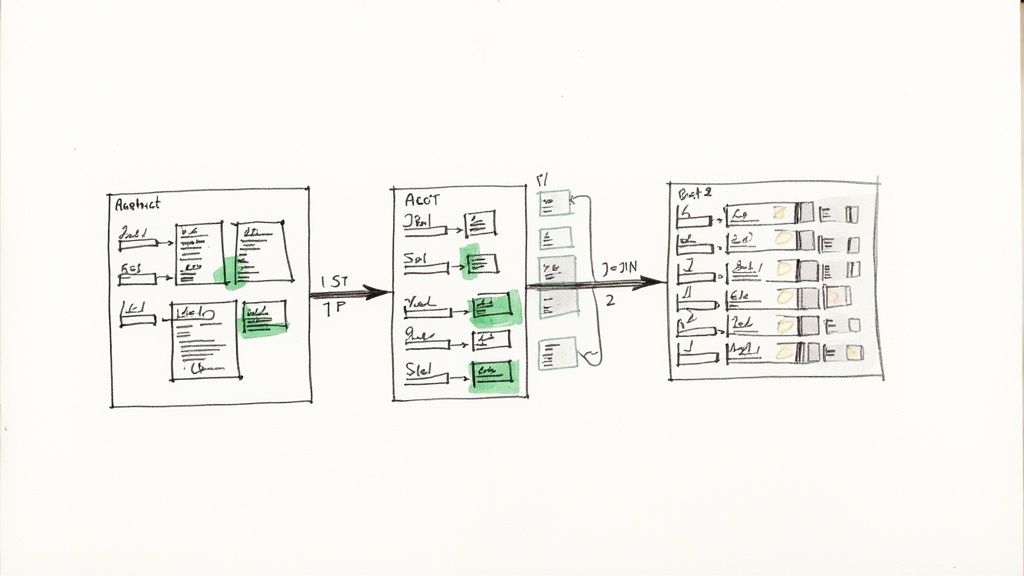
Before diving into Azure services, the DP-900 ensures you understand the building blocks:
- Relational Data: Structured tables with rows, columns, and relationships. Perfect for transactional systems like banking or inventory.
- Non-Relational Data (NoSQL): Flexible, schema-less data for high-scale apps like social feeds and IoT.
- Semi-Structured Data: JSON or XML—organized with tags but not rigid schemas.
- Workloads:
- Transactional (OLTP): Fast, accurate writes (banking, e-commerce).
- Analytical (OLAP): Deep queries over historical data (business intelligence).
Relational Data Services in Azure
Azure provides several managed options for relational data:
| Service | Best For | Key Feature | Model |
|---|---|---|---|
| Azure SQL Database | New cloud-native apps | Serverless scaling, built-in intelligence | PaaS |
| Azure SQL Managed Instance | Migrating on-prem SQL Server | High compatibility with legacy workloads | PaaS |
| Azure Database for MySQL | Open-source web apps | Managed MySQL with backups & scaling | PaaS |
| Azure Database for PostgreSQL | Complex, extensible apps | Advanced data type support | PaaS |
| Azure Database for MariaDB | Community-driven workloads | MySQL fork with open-source commitment | PaaS |
Key takeaway: pick the service that matches your workload—cloud-native, migration, or open-source.
Non-Relational Data Services

Azure’s non-relational toolbox powers scale, speed, and flexibility:
- Azure Cosmos DB: Multi-model (key-value, document, graph) + global distribution. Perfect for apps needing low latency worldwide.
- Azure Blob Storage: Object storage for images, videos, backups, and logs.
- Azure Table Storage: Simple, scalable key-attribute store for large structured datasets.
Azure Analytics: Turning Data into Insights

Storing data is step one. Analytics services unlock its value:
- Azure Data Factory (ADF): Orchestrates data pipelines (ETL).
- Azure Synapse Analytics: Combines data warehousing + big data analytics in one.
- Microsoft Power BI: Visualizes data into dashboards and reports for decision-making.
Together, these services take raw inputs and transform them into actionable business intelligence.
Action Plan for the DP-900 Exam
Study Roadmap
- Start with the official Microsoft Learn path (free and exam-aligned).
- Get hands-on with a free Azure account—practice provisioning services.
- Use practice exams to build confidence and identify weak spots.
Exam Tips
- Focus on high-weight domains: core data concepts + analytics workloads.
- Spend 15–20 minutes daily in the Azure portal.
- Treat DP-900 as a stepping stone toward advanced certifications like DP-203 (Data Engineer) or DP-300 (Database Administrator).
👉 Ready to start? Explore the MindMesh DP-900 Study Guide for structured prep with practice exams and flashcards.
Common Questions
Do I need prior experience?
No. DP-900 is beginner-friendly and assumes no prior data/cloud knowledge.
How difficult is it?
Approachable. It tests the what and why of Azure services, not advanced coding or configuration.
What career paths does it open?
Entry-level roles like Data Analyst, BI Analyst, or Database Support, plus a pathway to advanced certifications.
The DP-900’s value is in breadth—it ensures you can “speak data” in Azure, no matter your role.
Final Word
The Azure Data Fundamentals certification gives you the grammar of cloud data—the essential foundation for every advanced data role. Whether you’re a student, business leader, or IT professional, it’s the perfect launchpad into the Azure ecosystem.
Ready to prepare with confidence? MindMesh Academy offers expert-led guides and practice resources to help you pass on your first try. 👉 Explore the DP-900 Study Guide
Looking for a broader foundation first? Start with our AZ-900 Azure Fundamentals guide to build core cloud knowledge.

Written by
Alvin Varughese
Founder, MindMesh Academy
Alvin Varughese is the founder of MindMesh Academy and holds 15 professional certifications including AWS Solutions Architect Professional, Azure DevOps Engineer Expert, and ITIL 4. He's held senior engineering and architecture roles at Humana (Fortune 50) and GE Appliances. He built MindMesh Academy to share the study methods and first-principles approach that helped him pass each exam.