Your Guide to Azure Certifications Paths for Cloud Career Growth
Your Guide to Azure Certification Paths for Cloud Career Growth
Embarking on a cloud career without a strategic plan can feel like navigating an unfamiliar, sprawling metropolis without a map. Microsoft's Azure certification paths serve as that indispensable guide, providing a clear, structured roadmap for your learning journey. They transform the bewildering landscape of cloud skills into well-defined, role-focused tracks. Imagine them as distinct subway lines, each leading to a specific career destination—such as a Cloud Administrator, Developer, or Security Engineer—with each certification representing a pivotal stop along the way. At MindMesh Academy, we believe this structured approach is fundamental to building a robust and future-proof career in the cloud.
Charting Your Course With Azure Certifications
Succeeding in the dynamic cloud world isn't about aimlessly accumulating new tech skills; it demands a clear, deliberate direction. Microsoft has meticulously structured its certifications to guide IT professionals through a logical skill progression, starting with foundational concepts and advancing to deep, specialized expertise. This framework transcends mere badge collection for your LinkedIn profile; it's a strategic blueprint for career advancement, providing concrete credibility and demonstrable proof of your ability to excel in specific, high-demand roles.
Your journey through Azure begins with understanding its main certification tiers. Each level systematically builds upon the one preceding it, establishing a robust foundation of knowledge crucial for tackling more complex responsibilities. This step-by-step approach ensures you acquire the right skills at the optimal time. For those new to the cloud, it offers an accessible and welcoming entry point. For seasoned IT veterans, it provides a powerful mechanism to validate and formalize hard-earned advanced skills.
The Three Tiers of Azure Expertise
The entire Azure certification framework is built upon three primary levels, each meticulously designed to align with a different stage of your professional development. These tiers are crucial for bringing clarity to the numerous Azure certifications paths available.
- Fundamentals Level: This is the essential starting point. Certifications at this level focus on the core concepts of cloud computing and the fundamental services offered by Azure. It's the ideal entry point for newcomers, individuals in non-technical roles requiring cloud understanding (e.g., project managers, sales teams), or anyone needing to establish a common language for cloud discussions. For example, similar to how the CompTIA Cloud+ provides a vendor-neutral cloud foundation, Azure Fundamentals provides an Azure-specific conceptual baseline.
- Associate Level: This tier targets hands-on practitioners. Achieving an Associate certification confirms your ability to actively implement, manage, and monitor Azure solutions in specific roles, such as an administrator, developer, or security engineer. This is where you transition from understanding "what" Azure is to demonstrating "how" to effectively work with it.
- Expert Level: Reaching this tier signifies mastery. It's designed for highly experienced professionals who are capable of architecting, designing, and implementing large-scale, complex solutions for enterprise organizations. The emphasis here shifts towards high-level design, strategic thinking, and translating business requirements into robust cloud architectures. Think of it as the cloud equivalent of a PMP certification for project management – it signifies a comprehensive understanding and ability to lead.
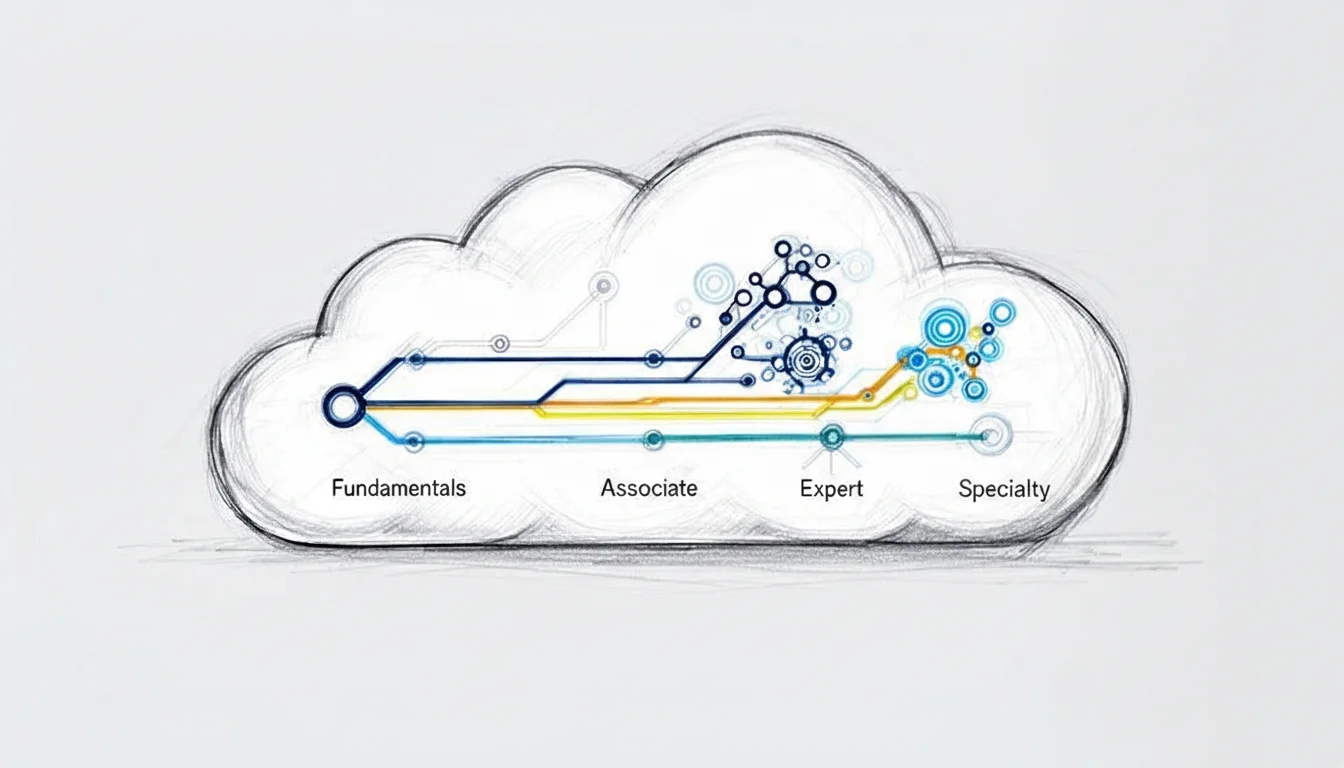
This visual illustrates the clear progression through the Azure certification tiers, demonstrating the logical journey from foundational knowledge to expert-level mastery.

As depicted, each level serves as a crucial stepping stone to the next, carving out a distinct and logical path for advancing your career within the expansive Azure ecosystem.
To provide a concise overview, here’s how the different levels are structured and who they are primarily designed for.
Azure Certification Levels at a Glance
| Certification Level | Target Audience | Career Focus | Key Certifications |
|---|---|---|---|
| Fundamentals | Beginners, non-technical staff, sales/marketing | Foundational cloud concepts, basic Azure services | AZ-900 (Azure Fundamentals), AI-900, DP-900 |
| Associate | IT professionals with hands-on cloud experience | Role-specific implementation and management | AZ-104 (Administrator), AZ-204 (Developer), AZ-500 (Security) |
| Expert | Senior engineers, architects, consultants | Advanced solution design and complex problem-solving | AZ-305 (Solutions Architect), AZ-400 (DevOps Engineer) |
This table provides a quick structural perspective, making it easier to identify where your current skills align and what your next strategic step might be.
Aligning Certifications With Your Career Goals
Selecting the appropriate certification path is fundamentally about harmonizing your personal career aspirations with a specific, well-defined track. Are you energized by the idea of building, maintaining, and optimizing the infrastructure that underpins everything? If so, the Azure Administrator path, anchored by the AZ-104 certification, is likely your ideal direction. Conversely, if your passion lies in writing code and crafting modern cloud applications, the Azure Developer path (AZ-204) presents an excellent fit. It's highly recommended to explore a complete Azure certification list to fully grasp the breadth of possibilities.
By aligning your certification choices with a specific career role, you transform your learning from an academic exercise into a practical tool for professional advancement. This focused approach ensures the skills you gain are directly applicable to the job you want, maximizing your return on investment in time and effort.
For those aiming to specialize in a niche but highly valuable area, mastering MS Azure integrations can significantly amplify your career prospects and inform your certification choices. Ultimately, the goal is to construct a personalized roadmap that not only validates your existing skills but also strategically paves the way for your desired future career trajectory.
Reflection Prompt: Take a moment to consider your current role or your ideal next role. Which Azure certification tier and path most closely align with those aspirations? How might achieving this certification directly impact your daily responsibilities or future opportunities?
Building Your Foundation With AZ-900 Azure Fundamentals
Every significant journey into cloud technology must have a starting point. For anyone looking to enter the world of Microsoft Azure, the AZ-900 Azure Fundamentals certification is that crucial first stride. It's meticulously designed to provide a solid, holistic understanding of core cloud computing concepts and Azure's foundational services, making it the perfect launchpad for any subsequent certification path.
Consider the AZ-900 as learning the essential grammar and vocabulary of the cloud. Just as you cannot write a complex novel without mastering basic language, you cannot build sophisticated cloud solutions without a firm grasp of fundamental terminology and principles. This certification ensures everyone, from deeply technical engineers to sales professionals, shares a common understanding and can communicate effectively about Azure.
Who Is This Certification For?
The true brilliance of the AZ-900 lies in its broad and inclusive appeal. It's not exclusively for aspiring cloud engineers; it caters to a much wider professional audience, offering value across various organizational roles.
You'll find this certification an excellent fit if you are:
- A Complete Beginner: If you're just exploring the vast realms of IT or cloud computing, this exam provides the gentle, yet comprehensive, on-ramp you need.
- A Career Changer: Transitioning into a tech-focused role? The AZ-900 offers a credible, foundational credential that signals your commitment and readiness to potential employers.
- In a Non-Technical Role: Professionals in sales, marketing, finance, or project management who interact with cloud-related initiatives will find this invaluable for intelligent communication with technical teams and understanding business implications.
- An Existing IT Pro: Coming from traditional on-premises infrastructure? This certification offers a rapid and efficient pathway to understanding core cloud principles before diving into more advanced Azure certifications paths.
- A Manager/Leader: Understanding the basics of Azure enables better decision-making, resource allocation, and strategic planning within a cloud-first organization.
In essence, if your role requires you to comprehend what the cloud is, how it operates, and what capabilities Azure offers, this certification is tailor-made for you.
What Does The AZ-900 Exam Cover?
The AZ-900 exam is structured to progressively build your knowledge. It begins with high-level cloud paradigms and then delves into Azure-specific services and features. Crucially, it doesn't require coding skills or command-line scripting; the sole focus is on conceptual understanding and recognizing Azure's capabilities.
The AZ-900 is less about how to perform specific tasks in Azure and more about what Azure services can achieve and why you would choose to use them. It establishes the essential conceptual framework required for all subsequent role-based certifications.
Here’s a detailed look at the key knowledge areas you'll be assessed on:
- Cloud Concepts: Gain a firm grasp of fundamental terms like Infrastructure-as-a-Service (IaaS), Platform-as-a-Service (PaaS), and Software-as-a-Service (SaaS), alongside understanding the differences between public, private, and hybrid cloud deployment models. This is critical for strategic cloud discussions.
- Core Azure Services: Become familiar with Azure's primary offerings, such as Virtual Machines (VMs) for compute, Blob Storage for unstructured data, Azure SQL Database for relational data, and Virtual Networks for secure connectivity. Understanding these building blocks is vital.
- Security, Privacy, and Compliance: Cover the essentials of Azure security, identity management using Microsoft Entra ID (formerly Azure Active Directory), and governance tools like Azure Policy and Resource Locks. This lays the groundwork for secure cloud operations.
- Azure Pricing and Support: Understand Azure's consumption-based pricing model, subscription management, and the guarantees provided by Service Level Agreements (SLAs). This is crucial for managing cloud costs and expectations.
When you're ready to start studying, our comprehensive AZ-900 Microsoft Azure Fundamentals Study Guide provides a clear and structured pathway to master these topics.
Navigating Exam Difficulty And Study Time
Among Microsoft's extensive certification portfolio, the AZ-900 stands out as one of the most accessible. The questions are predominantly knowledge-based, assessing your understanding of concepts rather than your ability to solve complex, multi-step technical problems. There are no prerequisites, and while some general IT familiarity is beneficial, hands-on experience isn't mandatory to pass. In terms of difficulty, it's often compared to the AWS Cloud Practitioner (CLF-C01) or Google Cloud Digital Leader, serving a similar foundational purpose across different cloud providers.
Most individuals can adequately prepare for the AZ-900 with approximately 15-30 hours of focused study. If you possess an existing IT background, you might achieve certification within a week or two. For those entirely new to technology, dedicating a month of consistent learning is a prudent plan.
The exam itself is offered in 11 languages and typically costs $99. This relatively modest investment can open significant career doors, with certified professionals frequently reporting a 10-15% earnings boost as they transition into more advanced cloud roles. For the most current information and official details, always refer directly to Microsoft's official exam page: learn more about the official exam details.
Choosing Your Path to Role-Based Associate Certifications
Having successfully mastered the fundamentals with the AZ-900, you're now proficient in the language of Azure. It's time to translate that theoretical knowledge into demonstrable, practical skills. This is precisely where Associate-level certifications come into play. They elevate you from simply knowing cloud concepts to proving you possess the practical, hands-on abilities required for specific, high-demand IT roles. These credentials are your essential ticket to showing employers that you can not only understand but also perform the work.
To extend an earlier analogy: the Fundamentals certification taught you what a hammer, a saw, and a box of nails are. An Associate certification, however, proves you can skillfully use these tools to construct a sturdy, functional table. This is the critical transition from conceptual understanding to real-world application, making Associate certifications a non-negotiable step in your comprehensive Azure journey.
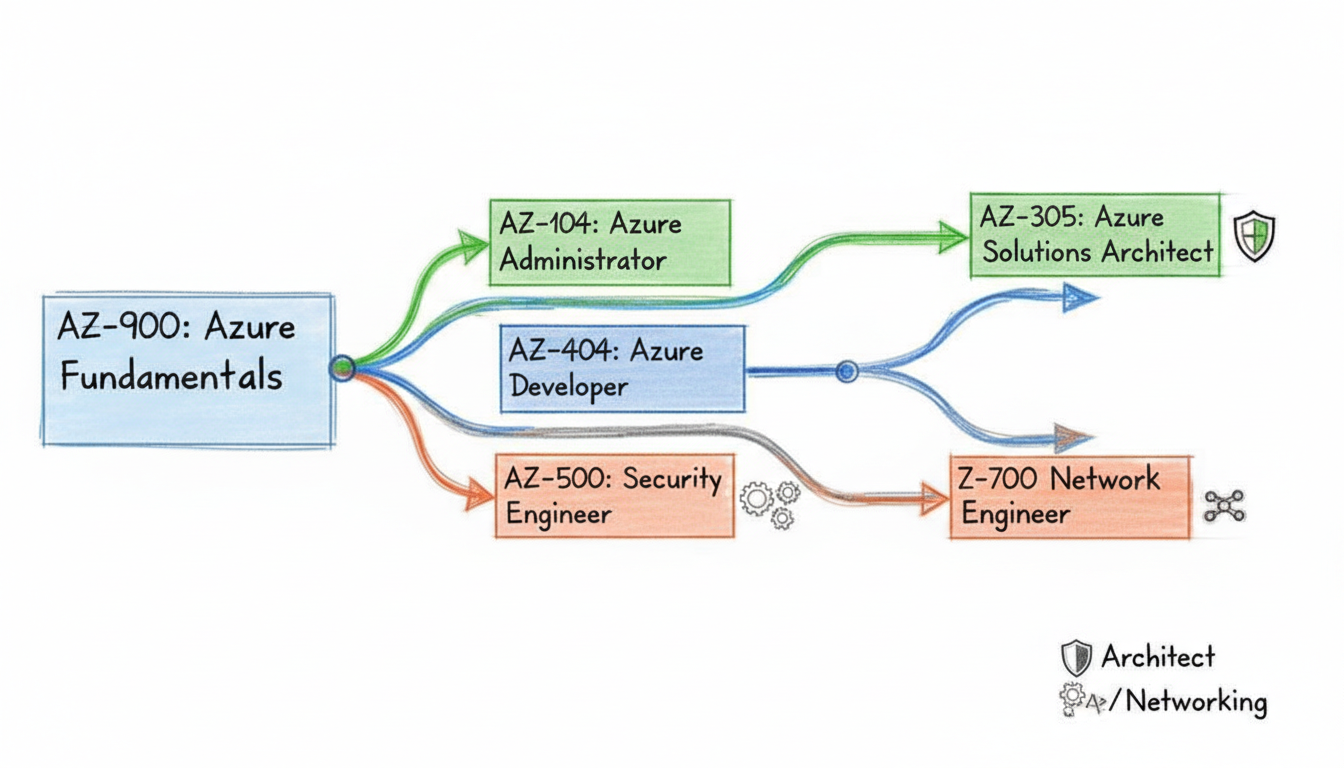
This next phase is all about strategically aligning your career aspirations with a specific, in-demand cloud role. Let's delve into some of the most popular and impactful Associate-level certifications you can pursue.
The Azure Administrator Associate AZ-104
Are you the kind of professional who thrives on ensuring systems run seamlessly and efficiently behind the scenes? If you're drawn to becoming the operational backbone of an organization's cloud infrastructure, the Azure Administrator role is your ideal calling. These professionals are responsible for implementing, managing, and monitoring core Azure infrastructure, guaranteeing everything is secure, optimized, and consistently reliable.
On any given day, an Azure Administrator's responsibilities might include:
- Provisioning and meticulously configuring virtual machines (VMs) for new applications and services.
- Managing various storage accounts, ensuring data integrity, and rigorously verifying backup and recovery processes.
- Actively monitoring network traffic and precisely adjusting firewall rules and network security groups to harden the cloud environment.
- Leveraging Microsoft Entra ID for robust identity and access management, controlling who can access what resources.
- Automating routine tasks using Azure PowerShell or Azure CLI to enhance operational efficiency.
The AZ-104 exam is precisely designed to validate these critical skills, making it an indispensable credential for anyone in IT operations, systems administration, or infrastructure management. When you're prepared to tackle this challenge, our dedicated AZ-104 Microsoft Azure Administrator study guide offers a clear and structured roadmap to success.
Indeed, the Microsoft Azure Administrator Associate (AZ-104) has consistently emerged as one of the most sought-after credentials in the entire cloud industry. Its enduring popularity stems from its focus on the direct, actionable skills needed to manage identities, storage, compute resources, and virtual networks within Azure. As Azure's market share continues its upward trajectory, so too does the demand for AZ-104 certified professionals. For instance, in late 2025, India alone boasted over 5,000 active Azure-related job openings, with a significant number explicitly listing the AZ-104 as a key requirement. You can explore the rise of in-demand Microsoft certifications to observe this trend firsthand.
The Azure Developer Associate AZ-204
For those whose professional passion lies in coding and building, the Azure Developer Associate path is the unequivocal choice. This certification is tailored for software developers who are responsible for designing, building, testing, and maintaining cloud applications and services natively on Azure. The focus shifts significantly from infrastructure management to leveraging Azure's comprehensive Platform-as-a-Service (PaaS) offerings and developer tools to create modern, scalable, and resilient software solutions.
A typical day in the life of an Azure Developer might involve:
- Developing and deploying code for event-driven solutions like Azure Functions or Azure Logic Apps to process data efficiently.
- Integrating applications with various Azure data services, such as Azure SQL Database, Azure Cosmos DB, or Azure Storage.
- Deploying and managing web applications on Azure App Service and configuring robust CI/CD pipelines for automated updates and deployments.
- Implementing secure authentication and authorization mechanisms for APIs and microservices using Azure Active Directory and API Management.
- Debugging and optimizing cloud-native applications for performance and cost-efficiency.
The AZ-204 exam is a rigorous assessment—it typically demands one to two years of professional development experience, crucially including practical time spent working directly with Azure services. It's designed to confirm your proficiency in programming with an Azure-supported language (like C#, Java, Node.js, Python), and your adeptness with Azure SDKs, various data solutions, and diverse compute options.
The Azure Security Engineer Associate AZ-500
In an era where a single security breach can trigger widespread negative headlines and devastating financial consequences, the Azure Security Engineer is an absolutely vital and highly valued role. These professionals are the digital guardians of the cloud, dedicated to meticulously protecting an organization's sensitive data, critical applications, and underlying infrastructure. Their core mission is to implement robust security controls proactively and to vigilantly hunt for and mitigate potential threats.
A Security Engineer’s day is characterized by continuous proactive defense and swift, decisive response:
- Implementing stringent identity and access management policies and controls using Microsoft Entra ID, role-based access control (RBAC), and privileged identity management (PIM) to prevent unauthorized access.
- Establishing comprehensive platform protection by securing virtual networks, implementing advanced firewall rules, and configuring denial-of-service (DDoS) protection.
- Managing security operations, often deploying and leveraging advanced tools like Microsoft Sentinel for Security Information and Event Management (SIEM) and Security Orchestration, Automation, and Response (SOAR).
- Securing data and applications through encryption at rest and in transit, data loss prevention (DLP) policies, and secure coding practices.
The AZ-500 certification is specifically designed for professionals who prioritize security above all else. It serves as undeniable proof that you not only possess the ability to identify potential vulnerabilities but also to implement robust, resilient solutions to neutralize them, making you an incredibly valuable and indispensable asset to any modern IT team.
Choosing the right Associate-level certification is a pivotal moment for your career. By thoroughly understanding the day-to-day responsibilities and technical demands of each of these roles, you can make an informed decision that truly aligns with your existing skills, professional passions, and long-term career trajectory, setting yourself up for profound success in the cloud.
Reaching the Summit With Expert-Level Certifications
If Associate-level certifications validate your ability to operate specific cloud tools, Expert-level certifications demonstrate your capacity to design and oversee the construction of the entire digital city. This represents the pinnacle for most Azure certification paths, intended for seasoned professionals who have transcended routine operational tasks to focus on high-level strategy, complex architectural design, and profound business impact. It signifies a fundamental shift in mindset—from adeptly doing to strategically designing and leading.
At this advanced level, you are no longer merely laying the digital bricks. You become the principal architect, crafting the comprehensive blueprint for complex, highly resilient, and utterly secure cloud infrastructures that solve intricate, real-world business challenges. This is where your deep, accumulated experience across IT operations, development practices, and security principles converge into a cohesive, strategic capability.
The Azure Solutions Architect Expert AZ-305
The Azure Solutions Architect Expert certification is widely regarded as one of the most prestigious and highly respected credentials attainable in the cloud industry. It definitively certifies your expertise in designing and implementing robust, scalable, and cost-effective solutions on Microsoft Azure, encompassing the full spectrum from compute and networking to storage, data, and security.
Consider the role of a traditional building architect. They don't personally pour the concrete or install the wiring, but they conceive the master plan, ensuring a skyscraper can withstand environmental stresses, comply with regulations, and meticulously fulfill the client's vision. An Azure Solutions Architect performs an analogous function for a cloud environment, making critical design decisions that determine the scalability, security posture, cost-efficiency, and operational resilience for years to come.
To attain the esteemed Azure Solutions Architect Expert certification, you must first demonstrate your hands-on proficiency by holding the Azure Administrator Associate (AZ-104) certification. This essential prerequisite ensures that every architect possesses a solid, practical foundation in managing Azure resources before they embark on the complex journey of designing large-scale cloud solutions. This layered approach mirrors other industry-leading certifications like the AWS Solutions Architect Professional, which typically recommends associate-level prerequisites.
The AZ-305 exam is not about rote memorization of command-line syntax or clicking through portal menus. Instead, it presents you with complex business scenarios and challenges you to design the most optimal, secure, and cost-effective cloud solution. You will be rigorously tested on your ability to:
- Design identity, governance, and monitoring solutions: Crafting comprehensive strategies for secure access, resource management, policy enforcement, and operational visibility across an enterprise cloud footprint.
- Design data storage solutions: Critically evaluating and selecting the most appropriate database services, storage accounts, and data integration patterns to meet diverse application and business requirements.
- Design business continuity solutions: Developing robust backup strategies, disaster recovery plans, and high-availability architectures to ensure uninterrupted operations.
- Design infrastructure solutions: Architecting compute resources, intricate networking topologies, and strategic migration plans for existing on-premises workloads to Azure.
This certification is fundamentally about translating complex business requirements into elegant, secure, scalable, and reliable cloud solutions that drive organizational value.

The Azure Solutions Architect Expert (AZ-305) is undeniably a top-tier certification for anyone aspiring to design advanced Azure solutions, and its demand is projected to grow exponentially. The exam typically costs $165 and is targeted at professionals with substantial IT operations and design experience. In the UK, it is particularly favored by employers in the finance and healthcare sectors, where architect salaries can span a significant range from £55,000 to over £95,000. You can discover more pertinent details about this leading Azure certification on datacamp.com.
The DevOps Engineer Expert AZ-400
While the Solutions Architect excels at designing the "what" of a cloud solution, the DevOps Engineer Expert intently focuses on the "how"—specifically, how to deliver value to end-users with greater speed, reliability, and consistency. This certification is ideal for professionals who masterfully integrate people, processes, and technology to continuously deliver products that effectively solve real business problems.
The DevOps path is fundamentally about dismantling traditional silos between development (Dev) and operations (Ops) teams. A certified DevOps Engineer Expert is a paragon of automation and collaboration, streamlining the entire journey from the initial line of code to a fully operational, live production feature. Their overarching goal is to establish a seamless, automated flow with rapid, iterative feedback loops, fostering a culture of continuous improvement.
To earn this highly specialized certification, you must first hold either the Azure Administrator Associate (AZ-104) or the Azure Developer Associate (AZ-204) certification. This prerequisite is entirely logical, as the modern DevOps role is inherently a hybrid discipline, demanding a strong, practical grasp of both infrastructure management and software development principles.
The AZ-400 exam will rigorously test your expertise in:
- Developing an instrumentation strategy (how you meticulously monitor and collect telemetry from systems and applications).
- Developing a Site Reliability Engineering (SRE) strategy, focusing on operational excellence, incident management, and error budgeting.
- Creating a comprehensive security and compliance plan that integrates DevSecOps practices throughout the software development lifecycle.
- Managing source control effectively, implementing branching strategies, and ensuring code quality.
- Facilitating robust communication and collaboration across diverse teams, fostering a shared sense of ownership.
- Defining and implementing sophisticated continuous integration (CI) and continuous delivery (CD) pipelines to automate builds, tests, and deployments.
Earning an Expert-level certification is a profoundly powerful statement. It unequivocally communicates to employers that you possess the strategic vision, profound technical acumen, and leadership capabilities required to steer their most critical and complex cloud projects to successful fruition.
Carving Out Your Niche With Specialty Certifications
While the role-based certifications establish your core competencies as an administrator, developer, or architect, specialty certifications are designed to certify you as a true subject matter expert in a very specific, high-demand technological domain. These are not typically entry-level certifications. Instead, consider them as intensive deep dives into highly specialized technologies that address particular, and often very expensive, business challenges.
To revisit our medical analogy: an Associate-level certification is akin to becoming a general practitioner—you possess a broad and essential skillset. An Expert-level certification is like being a master surgeon, with advanced knowledge encompassing an entire system. A specialty certification, however, is analogous to a neurosurgeon who focuses on one incredibly complex, critical, and often rare field. Organizations actively seek these specialists when the stakes are exceptionally high and general knowledge simply won't suffice.
Holding one of these highly specialized certifications provides a significant competitive advantage. In a crowded job market, a specialty certification on your resume serves as a clear and unmistakable signal of profound expertise that the majority of professionals do not possess. It unequivocally demonstrates that you have gone the extra mile to master a technology that is often intricate but absolutely indispensable for certain industries and complex problem sets.
Reflection Prompt: Are there any highly specialized areas within Azure, such as AI, IoT, or SAP, that deeply interest you? How might acquiring a specialty certification in one of these areas differentiate you in the job market and align with your long-term career aspirations?
Diving Into Azure For SAP Workloads
One of the most intensely sought-after specialty certifications is the Azure for SAP Workloads Specialty (AZ-120). For many decades, SAP has served as the operational backbone for countless global enterprises, managing everything from core finance and human resources to complex global supply chains. Migrating these massive, mission-critical, and highly sensitive systems to the cloud is an incredibly delicate and profoundly complex undertaking.
This certification explicitly validates your highly specialized skills required to successfully accomplish such migrations and ongoing operations. A certified professional possesses a deep understanding of the unique architecture, intricate networking requirements, and stringent high-availability demands inherent in running an SAP landscape securely and efficiently on Azure.
These specialists are the problem-solvers who address challenges such as:
- Designing an Azure infrastructure that can consistently meet SAP’s notoriously strict performance benchmarks and latency requirements.
- Executing seamless migrations of colossal SAP HANA databases into the cloud with near-zero downtime, minimizing business disruption.
- Constructing bulletproof disaster recovery solutions and high-availability clusters for systems that absolutely cannot tolerate failure.
Earning the AZ-120 credential strategically positions you as an elite architect or consultant, fully prepared to lead some of the most challenging—and potentially lucrative—enterprise cloud projects available.
Mastering The Internet Of Things
Another captivating and rapidly evolving specialty is addressed by the Azure IoT Developer Specialty (AZ-220). The Internet of Things (IoT) revolution is centered on connecting billions of diverse physical devices to the cloud—ranging from minuscule sensors on a factory floor to sophisticated smart appliances in your home—to collect, analyze, and act upon vast streams of real-time data. This emergent field demands a unique and intricate blend of skills spanning hardware integration, robust networking, stringent security protocols, and advanced data analytics.
An Azure IoT specialist is the indispensable engineer who meticulously builds the crucial bridge between the physical and digital worlds.
The AZ-220 certification comprehensively validates your ability to design, implement, and manage the entire lifecycle of an IoT solution on Azure. This encompasses everything from securely connecting a multitude of devices and processing immense streams of real-time sensor data to seamlessly integrating that invaluable information with other critical business applications and analytics platforms.
An IoT expert might be tasked with conceptualizing and developing a "smart factory" solution that intelligently utilizes sensor data to predict precisely when a machine requires preventative maintenance, thereby minimizing costly downtime. Alternatively, they might construct a sophisticated global logistics system capable of tracking packages with granular, real-time precision. This certification is specifically designed for developers who are passionate about building solutions that interact directly and meaningfully with the tangible world around us.
Choosing to pursue a specialty certification is a highly strategic career move. It empowers you to target more impactful and technically demanding projects, significantly stand out from the general professional crowd, and ultimately command a higher earning potential commensurate with your unique expertise.
So, How Do You Actually Prepare for an Azure Exam?
Understanding which certification path to embark upon is one crucial step, but successfully passing the exam itself boils down to executing a solid, well-structured study plan. The journey from merely reading about Azure services to confidently applying that knowledge under exam pressure requires a clear, step-by-step approach tailored to your existing background and the specific exam you're targeting. Consider this your personalized battle plan for achieving certification success.
First and foremost, it's essential to be realistic about the time commitment involved. For a fundamentals exam like the AZ-900, someone completely new to the cloud might reasonably need 30-40 hours of focused study. If you're already an IT professional with some foundational knowledge, you could potentially prepare in under 15 hours.
As you progress to an Associate-level exam such as the AZ-104 (Azure Administrator), the commitment naturally increases. If you already have some practical experience working with Azure, budget approximately 60-80 hours for thorough preparation. If you're starting with limited hands-on experience, you're realistically looking at 100-120 hours to get properly prepared, including significant time for hands-on labs.
The Building Blocks of a Great Study Plan
A truly effective study plan extends far beyond simply cramming documentation the week before the exam. It's a strategic blend of diverse learning methods that systematically build both your theoretical knowledge and your crucial, practical, hands-on skills. The most successful plans always interweave official learning materials with dedicated time spent actively using Azure.
Here’s a simple yet profoundly effective framework that consistently yields results:
- Start with the Official Microsoft Learn Path: This should always be your foundational resource. Microsoft provides free, easy-to-follow modules that are directly mapped to the exam objectives. Consider it the official textbook, and it's free. Skipping this crucial step is ill-advised.
- Get Your Hands Dirty with Labs: You simply cannot master Azure from a textbook alone. It's akin to attempting to learn how to swim by merely reading a book about swimming. Sign up for a free Azure account (which often includes credits) and start building. Follow official tutorials, spin up your own virtual machines, configure storage accounts, set up virtual networks, or try to complete small, project-based tasks. For any Associate or Expert-level exam, hands-on experience isn't merely optional—it's absolutely essential.
- Utilize High-Quality Practice Exams: Once you feel you have a solid grasp of the material, it's critical to rigorously test yourself. Practice exams are invaluable for familiarizing yourself with the question styles, practicing time management under pressure, and—most importantly—identifying your weak areas before the actual test exposes them. Look for practice exams that offer detailed explanations for both correct and incorrect answers to maximize your learning. This is also where techniques like active recall and spaced repetition, integrated into platforms like ours, can significantly boost retention.
Here at MindMesh Academy, we've meticulously designed our entire platform around this very structured approach. Our intuitive progress dashboard clearly shows you exactly which topics you've mastered and where you require additional focus. Our proprietary spaced repetition and adaptive learning algorithms are engineered to ensure you're not just memorizing facts for a week, but genuinely understanding and retaining concepts for the long haul.
The Final Stretch: Exam Day and What Comes Next
When you are consistently achieving high scores on your practice tests and feel confident in your abilities, you are ready. Proceed to register for your exam on the official Microsoft certification portal. You'll typically have the flexibility to choose between taking the exam in person at a certified testing center or from the comfort of your home with an online proctor.
On the day of the exam, the most valuable advice is simple: take a deep breath, read every single question meticulously, and maintain a keen awareness of the clock. You've invested the effort and put in the work, so trust your thorough preparation.
Passing your exam is a monumental achievement, but it's important to recognize that it's not the ultimate finish line. The cloud landscape evolves at an astonishing pace, and your skills must continuously adapt and keep pace. Role-based Azure certifications (Associate and Expert levels) are valid for one year, and to maintain their active status, you will need to successfully pass a free online renewal assessment.
This renewal process is not a flaw; it's a fundamental feature. Microsoft's annual renewal ensures that holding an Azure certification genuinely signifies current and relevant knowledge. View your certification not as a final, static achievement, but as an important and dynamic milestone in your ongoing professional development journey. With a well-crafted study plan and an unwavering commitment to continuous learning, you’ll be expertly positioning yourself for sustained success in the ever-changing, exhilarating world of cloud computing.
Answering Your Top Azure Certification Questions
As you diligently begin to map out your comprehensive Azure certification journey, it's entirely natural to have a multitude of questions. Everyone does. Obtaining clear, concise answers upfront is paramount to effectively planning your study time, allocating your budget, and making informed career decisions without encountering unexpected roadblocks or surprises.
Let's address one of the most common inquiries first: how long does the entire process take? Honestly, it profoundly depends on your starting point and the specific certification. For the AZ-900 Fundamentals, most individuals can successfully prepare within a few solid weeks of dedicated study. However, when you elevate your sights to an Associate-level certification like the AZ-104, you should realistically set aside 2-3 months, particularly if you're approaching it with some prior IT experience. Expert-level exams are an entirely different challenge, often necessitating 3-6 months of dedicated, in-depth preparation and significant hands-on practice.
Do Azure Certifications Expire?
Yes and no. The answer depends crucially on the certification level. The role-based certifications (encompassing both Associate and Expert levels) and the specialty certifications are valid for one year. Microsoft implements this expiration period to ensure that your certified skills remain sharp, current, and highly relevant within the rapidly evolving Azure platform ecosystem. This is a common practice in the IT certification world, similar to CompTIA's CE program or the PMI's PDU requirements for PMP renewal.
However, rest assured, you are not required to retake the entire, extensive exam. To maintain your certification's active status, you simply need to pass a free online renewal assessment available on Microsoft Learn. This assessment can be taken at any point within the six months preceding your certification's expiration date. It's a significantly quicker, open-book style test that primarily focuses on recent updates and changes to the Azure platform.
Here's the truly reassuring news: the Fundamentals certifications, such as the immensely popular AZ-900, do not expire. Once you have successfully earned it, it is yours for life—a permanent badge unequivocally demonstrating your mastery of the essential cloud basics.
As you strategically look to expand and grow your career, remember that strong Azure skills harmoniously complement other Microsoft technologies. Becoming proficient with the Microsoft Power Platform can unlock a brand-new world of opportunities in low-code application development, business process automation, and sophisticated business analytics, further solidifying your versatile skill set.
At MindMesh Academy, we've meticulously crafted learning paths and intelligent study tools designed to guide you through these challenging exams without the usual grind and uncertainty. Our adaptive learning platform and intuitive progress dashboards are specifically engineered to help you genuinely understand and internalize the material, rather than merely cramming for a test. Start your comprehensive Azure certification journey with us today!

Written by
Alvin Varughese
Founder, MindMesh Academy
Alvin Varughese is the founder of MindMesh Academy and holds 15 professional certifications including AWS Solutions Architect Professional, Azure DevOps Engineer Expert, and ITIL 4. He's held senior engineering and architecture roles at Humana (Fortune 50) and GE Appliances. He built MindMesh Academy to share the study methods and first-principles approach that helped him pass each exam.